
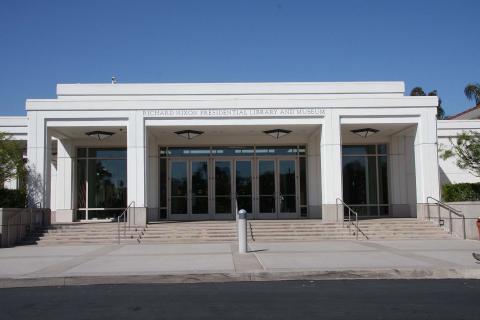
Introduction
This almanac page for Thursday, January 25, 1973, pulls together various records created by the federal government and links to additional resources which can provide context about the events of the day.
Previous Date: Wednesday, January 24, 1973
Next Date: Friday, January 26, 1973
Schedule and Public Documents
The Daily Diary files represent a consolidated record of the President's activities. Visit the finding aid to learn more.
The President's day began at The White House - Washington, D. C.
The Weekly Compilation of Presidential Documents made available transcripts of the President's news conferences; messages to Congress; public speeches, remarks, and statements; and other Presidential materials released by the White House.
Digitized versions can be found at HathiTrust.
Each Public Papers of the Presidents volume contains the papers and speeches of the President of the United States that were issued by the White House Office of the Press Secretary during the time period specified by the volume. The material is presented in chronological order, and the dates shown in the headings are the dates of the documents or events. In instances when the release date differs from the date of the document itself, that fact is shown in the text note.
To ensure accuracy, remarks have been checked against audio recordings (when available) and signed documents have been checked against the original, unless otherwise noted. Editors have provided text notes and cross references for purposes of identification or clarity.
The Federal Register is the official daily publication for rules, proposed rules, and notices of federal agencies and organizations, as well as executive orders and other Presidential documents.
No Federal Register published on this date
Archival Holdings
Any selection of archival documents will necessarily be partial. You should use the documents and folders identified below as a starting place, but consult the linked collection finding aids and folder title lists and the collections themselves for context. Many documents to be found this way do not lend themselves to association with specific dates, but are essential to a complete understanding of the material.
Selective document listing
President's Office Files
The President's Office Files consists of materials drawn together by the Special Files Unit from several administrative subdivisions within the White House Office. It is the handwriting and sensitive papers sent to the Staff Secretary that now comprise much of the President's Office Files. Visit the finding aid to learn more.
- News Summaries, Unmarked News Summaries, Box 53, News Summaries - January 12 to 31, 1973 [4 of 5] [Note: Due to the way News Summary products were compiled, you should also consult nearby days for potentially relevant materials.]
- News Summary, January 25, 1973, (Wed. nets, wires)
The H. R. Haldeman Diaries consists of seven handwritten diaries, 36 dictated diaries recorded as sound recordings, and two handwritten audio cassette tape subject logs. The diaries and logs reflect H. R. Haldeman’s candid personal record and reflections on events, issues, and people encountered during his service in the Nixon White House. As administrative assistant to the President and Chief of Staff, Haldeman attended and participated in public events and private meetings covering the entire scope of issues in which the Nixon White House engaged in during the years 1969-1973. Visit the finding aid to learn more.
- Transcript of diary entry (PDF)
Thursday, January 25.
I had quite a discussion this morning at the staff meeting and then later with the President on whether the President should do his Sunday TV speech on the budget. Shultz thinks that the speech that's drafted now is not good enough for Sunday night on television, and Ash agrees it's no good. It needs to be broader, and so on. Ash feels that we ought to use the transition from the war to domestic issues and the budget, as the basis for it. The President had argued that this was not the time to go on TV on budget because people are concerned with Vietnam which is our issue, and we want to keep them on it rather than diverting them to their issue, which is the other. Colson argues that we should wait two or three weeks, until after Vietnam soaks in. And Shultz agreed then, that we should let the war set in, too, and wait a couple of weeks, but Ash was concerned that we would lose the initiative on the budget if we do that. Ehrlichman disagrees with the "either/or" concept and says we should not lay the budget out and then step back and let them kick it around. That all our successes are flat, in terms of response, because of the lack of second level advocacy, and the Congressional struggle for this year will be lost in the next couple of weeks if the President doesn't take the initiative at the beginning. We should link the President's peace victory with the budget, and do it now, because the lobbyists are already underway and we need our initiative. It boils down to a question of timing. Everybody agreed on the need for a Presidential speech. The question is when to do it?
Ash made the point that all the early attacks on the budget will be on micro-issues, not on the main issues, so the President can wait and step in later on the overall basis. Ehrlichman argues that look at the Cabinet meeting yesterday, everybody is going to fight on the micro-issues, and if the President waits, he'll be speaking on the defensive instead of leading the charge. The debate pretty much ended on that point in the staff meeting.
I then went over to see the President before leaving for the Johnson funeral, and he said that his feeling was that he definitely would not go on TV. That he'd make a radio speech now, hard-hitting and strong, that he had reworked the speech with that in mind. He said, "First, the speech is lousy. Not just lousy, but incredibly lousy. It doesn't make the issue," and he just feels that now is the time to make a radio talk. Also he's concerned because he has a touch of the flu and doesn't feel he ought to plan to go on television. He argues that it's better to affect the Congress now, which the radio will do, and then hit the people later on TV when they're ready to listen to the budget, which isn't now. He suggested maybe doing a one minute TV spot on the no-tax budget to go with the radio spot, but nobody felt that was too good an idea, so they went ahead and worked the speech up on a radio basis, and he gave it late this afternoon.
This whole issue raised a big Ehrlichman problem. And he wrote me a longhand written note making the point that he hadn't been allowed to see the President since long before the Inaugural and that he was being "end-run" by Colson. And that he couldn't take the responsibility for these things and carry it out if he's going to be "end-run". He either has to have a chance to consult, or his judgment has to be ridden on. I had a long talk with John, working out some of this, and also covered it with the President and made the point that he does have this problem. And the President said that he would talk with John, but that it's got to be understood -- on scheduling matters and the use of the President's time -- no one should hit the President except me. That he can never discuss schedule with Kissinger or Colson or Ehrlichman, because Ehrlichman's judgment and none of the others' judgment is good on schedule. That John should understand that on domestic substance that he's the boss, and that no one takes any side shots on that, but on scheduling John feels the President should be out too much and has too much of a crisis atmosphere, and he doesn't want to do that. Then he suggested that John work up some ideas on bringing some people in and make sure that John understands that whenever he wants to see the President on major substance, he can always do so.
He had Ehrlichman in at 5:00 until almost 7:00. He made the point that John's got to be the end man at meetings, the moderator, to put the troops through their paces. That led to the Vice President's problem. He called Kissinger in on that. Then he got back to Ehrlichman's thing after Henry went out and discussed the problem of a number of items that John raised, including the question of confirmation of Presidential Assistants. The President's inclined to hold the line as Ehrlichman recommends. Then he made the side comment that it seems as if, in the Congressional arena, we're doomed to constant battle with second-rate people. He made the point to John that the governors need us now, we don't need them. It's vice versa with the Congress. We should spend our time working on Congress, not governors. He feels that we will fight the confirmation battle -- and that we should -- but that we will get rolled. On the second level advocacy thing, he wants to make up a list of people that he will send letters to periodically, to maintain contact with some key people in the country.
This morning, he got into the question of the Secret Service problem again. He has the impression that the Secret Service guys are unhappy -- Duncan and Taylor. He wants to be sure this is ironed out, that they're moved up and that on departure they get something nice from the President by way of a memento and a letter, and that we should make the point to them, especially to Duncan, that the President wants him to head the Secret Service. In the meantime, he wants him to move to a job where he gets some administrative experience, which is the point of this operation.
He had a session with Colson and me on the Vietnam attack. He wants to be sure now that the battle is joined. He wants to get out the content of some of the telegrams that are coming in on the positive side. Colson recommended that I should do an interview to give the story on how the decision was made, talking about the man, not the process, the color story on the courage of the President and so on. For instance, I was with the President when the Saxbe statement broke or when the Newsweek specter of defeat came out and how much of a problem that created.
The President feels we need an accurate story that goes beyond that he just tries to do the right thing and works hard. That we need the feel of it, and the only two in the White House that have ever done this are Moynihan and Connally and they're gone. The point is to create a broader picture -- plus the strength, hard-working and efficiency, and so on. We'll have to try to work something on that.
Henry told us about the problem with the VP, who is apparently demanding in his Vietnam trip he be given some negotiating to do. He wants to have something substantive to come home with that he accomplished. Henry tried to make the point that the negotiations are already done and signed, but he didn't understand that and so it's apparently going to be a running battle. Henry says also that the VP complains that Ehrlichman has done him in by taking away his intergovernmental relations responsibility, that Ziegler and I stabbed him by not telling him on Tuesday that the President was going on TV that night, before he went up to speak at the Senate Conference. The problem there being, of course, that we didn't know that he was speaking at the Senate Conference.
The President then got into a thing with John and me after Henry left about how the VEEP cannot be his successor and that the only two possibilities are Rockefeller and Connally, and Connally only if he moves over within the next couple of months. Ehrlichman argues that Connally is not qualified either, because he doesn't pick good people. But the President still feels strongly he would be the best one and that we've got to try to work something out and get a good Sherman Adams type to manage things for him. He was horrified at the VP's performance at the Cabinet meeting yesterday on the budget and feels that he just doesn't have what it takes.
End of January 25. - Original audio recording (MP3)
The National Archives Catalog is the online portal to the records held at the National Archives, and information about those records. It is the main way of describing our holdings and also provides access to electronic records and digitized versions of our holdings.
The Catalog searches across multiple National Archives resources at once, including archival descriptions, digitized and electronic records, authority records, and web pages from Archives.gov and the Presidential Libraries. The Catalog also allows users to contribute to digitized historical records through tagging and transcription.
Nixon Library Holdings
All National Archives Units
National Security Documents
The President's Daily Brief is the primary vehicle for summarizing the day-to-day sensitive intelligence and analysis, as well as late-breaking reports, for the White House on current and future national security issues. Read "The President's Daily Brief: Delivering Intelligence to Nixon and Ford" to learn more.
The Foreign Relations of the United States series presents the official documentary historical record of major U.S. foreign policy decisions and significant diplomatic activity. Visit the State Department website for more information.
Vol. IX, Vietnam, October 1972-January 1973
America Leaves the War, December 30, 1972-January 27, 1973
335. Memorandum From the Assistant to the President (Haldeman) to the President’s Assistant for National Security Affairs (Kissinger), Washington, January 25, 1973
Source: National Archives, Nixon Presidential Materials, NSC Files, Box 341, Subject Files, HAK/President Memos. Eyes Only. “Personal” and “Eyes Only” are written on the first page in an unknown hand. Printed from a copy that Haldeman did not initial or sign.
Vol. XXVII, Iran; Iraq, 1973-1976
Iran, January-August 1973
4. Telephone Conversation Between President Nixon and Director of Central Intelligence Helms, Washington, January 25, 1973, 6:18-6:22 p.m.
Source: National Archives, Nixon Presidential Materials, White House Tapes, Oval Office, Conversation 36–113. No classification marking. The editor transcribed the portion of the tape recording published here specifically for this volume. Helms was appointed Ambassador to Iran on February 8.
Vol. XXXVIII, Part 1, Foundations of Foreign Policy, 1973-1976
Foundations of Foreign Policy, 1973-1976
1. Memorandum From President Nixon to the White House Chief of Staff (Haldeman), Washington, January 25, 1973
Source: National Archives, Nixon Presidential Materials, Staff Member and Office Files, White House Special Files, President’s Personal Files, Memoranda From the President, 1969–1974, Box 4, Memos—January 1973. No classification marking. Printed from an uninitialed copy.
Vol. E-1, Documents on Global Issues, 1969-1972
U.S.-Cuba Hijacking Agreement, 1969-February 1973
141. Information Memorandum from Assistant Secretary for Inter-American Affairs (Meyer) and Acting Legal Adviser (Brower) to Secretary of State Rogers, Washington, January 25, 1973
Meyer informed Rogers that Swiss Ambassador Masnata reported that the Cubans were ready to accept the latest U.S. proposal on the hijacking agreement with two changes in the draft. Meyer suggested that the United States accept one change and that the Cuban Government agree to accept the U.S. language on the other.
Source: National Archives, RG 59, Central Files 1970-73, AV 12. Secret; Exdis. Drafted by Hurwitch and Feldman. Rogers wrote “OK” and initialed the memorandum. He also asked Eliot: “Is this acceptable to the Justice Dept?”
Vol. E-2, Documents on Arms Control and Nonproliferation, 1969-1972
Chemical and Biological Warfare; Geneva Protocol; Biological Weapons Convention
276. Memorandum From the Acting Chairman of the National Security Council Under Secretaries Committee (Johnson) to President Nixon, Washington, January 25, 1973
The memorandum summarized the Annual Review of the U.S. chemical warfare and biological research program. It included discussion on the issue of limiting riot control agents and herbicides in Vietnam.
Source: National Archives, Nixon Presidential Materials, NSC Files, NSC Institutional Files (H-Files), Boxes H–212 and H–213, NSDM 35. Top Secret. The attached Annual Review is not published.
Vol. E-9, Part 2, Documents on the Middle East Region, 1973-1976
Saudi Arabia
78. Telegram From the Embassy in Saudi Arabia to the Department of State, Jidda, January 25, 1973, 1412Z
Summary: The Embassy reported on conversations with Foreign Minister Umar al-Saqqaf regarding Saudi Arabia’s position vis-à-vis the Arab-Israeli dispute.
Source: National Archives, RG 59, Central Foreign Policy File, 1970–73, POL 27–14 Arab-Israeli. Confidential. Repeated to Amman, Beirut, Kuwait City, Tripoli, and Tel Aviv.
The Kissinger telephone conversation transcripts consist of approximately 20,000 pages of transcripts of Kissinger’s telephone conversations during his tenure as Assistant to the President for National Security Affairs (1969-1974) and Secretary of State (1973-1974) during the administration of President Richard Nixon. Visit the finding aid for more information.
Digitized versions can be found in the National Archives Catalog.
Audiovisual Holdings
Visit the White House Tapes finding aid to learn about the taping system's operation and archival processing.
Old Executive Office Building
- 405-1; Unknown between 7:54 a.m. & 8:38 a.m.; Nixon, Richard M. (President)
- 405-2; Unknown between 7:54 a.m. & 8:38 a.m.; Nixon, Richard M. (President); Haldeman, H. R. ("Bob")
- 405-3; Unknown between 7:54 a.m. & 8:38 a.m.; Nixon, Richard M. (President); [Unknown person(s)]
- 405-4; Unknown between 7:54 a.m. & 8:38 a.m.; Nixon, Richard M. (President); White House operator
- 405-5; 8:38 a.m. - 8:39 a.m.; Nixon, Richard M. (President); Bull, Stephen B.
- 405-6; Unknown between 8:39 a.m. & 9:01 a.m.; Nixon, Richard M. (President); [Unknown person(s)]
- 405-7; 9:01 a.m. - 9:03 a.m.; Nixon, Richard M. (President); Bull, Stephen B.
- 405-8; Unknown between 9:01 a.m. & 9:03 a.m.; Nixon, Richard M. (President)
- 405-9; 9:05 a.m. - 9:34 a.m.; Nixon, Richard M. (President); Haldeman, H. R. ("Bob"); Bull, Stephen B.
- 405-10; 12:45 p.m. - 12:45 p.m.; Nixon, Richard M. (President); [Unknown person(s)]
- 405-11; 12:45 p.m. - 2:16 p.m.; Nixon, Richard M. (President); Haldeman, H. R. ("Bob")
- 405-12; Unknown between 2:16 p.m. & 3:31 p.m.; Nixon, Richard M. (President); Sanchez, Manolo
- 405-13; Unknown between 2:16 p.m. & 3:31 p.m.; Nixon, Richard M. (President); Sanchez, Manolo
- 405-14; Unknown between 2:16 p.m. & 3:31 p.m.; Nixon, Richard M. (President); Sanchez, Manolo
- 405-15; Unknown between 2:16 p.m. & 3:31 p.m.; Nixon, Richard M. (President); [Unknown person(s)]
- 405-16; 3:31 p.m. - 4:33 p.m.; Nixon, Richard M. (President); Colson, Charles W.; Haldeman, H. R. ("Bob"); Sanchez, Manolo
Oval Office
- 842-1; Unknown between 11:06 a.m. & 11:18 p.m.; Nixon, Richard M. (President); Sanchez, Manolo
- 842-2; Unknown between 11:06 a.m. & 11:18 p.m.; Nixon, Richard M. (President); Bull, Stephen B.
- 842-3; Unknown between 11:06 a.m. & 11:18 p.m.; Nixon, Richard M. (President); Bull, Stephen B.
- 842-4; Unknown between 11:06 a.m. & 11:18 p.m.; Nixon, Richard M. (President)
- 842-5; Unknown between 11:06 a.m. & 11:18 p.m.; Nixon, Richard M. (President)
- 842-6; Unknown between 11:06 a.m. & 11:18 p.m.; Nixon, Richard M. (President); [Unknown person(s)]
- 842-7; 11:18 a.m. - 11:39 a.m.; Nixon, Richard M. (President); Haldeman, H. R. ("Bob"); Sanchez, Manolo; Bull, Stephen B.
- 842-8; 11:39 a.m. - 12:42 p.m.; Nixon, Richard M. (President); Rabin, Yitzhak; Atkins, Oliver F. ("Ollie"); Kissinger, Henry A.; [Unknown person(s)]; Sanchez, Manolo
- 842-9; 12:43 p.m. - 12:44 p.m.; Nixon, Richard M. (President); [Unknown person(s)]
- 842-10; Unknown between 4:55 p.m. & 5:00 p.m.; Nixon, Richard M. (President); Sanchez, Manolo; [Unknown person(s)]
- 842-11; Unknown between 4:55 p.m. & 5:00 p.m.; Nixon, Richard M. (President); Bull, Stephen B.
- 842-12; Unknown between 4:55 p.m. & 5:00 p.m.; Nixon, Richard M. (President); Bull, Stephen B.
- 842-13; 5:00 p.m. - 6:58 p.m.; Nixon, Richard M. (President); Haldeman, H. R. ("Bob"); Ehrlichman, John D.; Bull, Stephen B.; [Unknown person(s)]; Kissinger, Henry A.; Sanchez, Manolo; White House operator; Helms, Richard M.
White House Telephone
- 36-110; Unknown between 7:54 a.m. & 8:38 a.m.; Nixon, Richard M. (President); White House operator
- 36-111; 8:38 a.m. - 8:39 a.m.; Nixon, Richard M. (President); Bull, Stephen B.
- 36-112; Unknown between 5:34 p.m. & 6:18 p.m.; Nixon, Richard M. (President); White House operator
- 36-113; 6:18 p.m. - 6:22 p.m.; Nixon, Richard M. (President); Helms, Richard M.
- 36-114; Unknown between 6:22 p.m., 1/25 & 1:18 p.m., 12/27; Haldeman, H. R. ("Bob"); White House operator
The White House Photo Office collection consists of photographic coverage of President Richard Nixon meeting with prominent social, political, and cultural personalities; speaking engagements and news conferences of the President and various high-ranking members of the White House staff and Cabinet; Presidential domestic and foreign travel, including Presidential vacations; social events and entertainment involving the First Family, including entertainers present; official portraits of the President, First Family, and high-ranking members of the Nixon administration; the 1969 and 1973 Inaugurals; the President’s 1972 Presidential election campaign appearances (including speeches) and other official activities of the White House staff and the President’s Cabinet from January 20, 1969 until August 9, 1974 at the White House and the Old Executive Office Building; other locations in Washington, DC, such as The Mall; and the Presidential retreats in Camp David, Maryland, Key Biscayne, Florida, and San Clemente, California. Visit the finding aid to learn more.
Roll WHPO-E0104 Photographer: Knudsen, Robert L. | Color or B&W: B&W
- Frame(s): WHPO-E0104-02-22, The funeral ceremony for former President Lyndon Johnson (LBJ) at the National City Christian Church in Washington D.C. A large Presidential Seal is displayed among floral arrangements. The American Flag draped casket sits in the center of the transept. Opera singer Leontyne Price singing. 1/25/1973, Washington, D.C. interior, steps, The National City Christian Church. President Nixon, Pat Nixon, Lady Bird Johnson, Johnson family members, Rev. George Davis, Leontyne Price, W. Marvin Watson, Nixon family members, choir, guests, military personnel.
- Frame(s): WHPO-E0104-11, Opera singer Leontyne Price singing during the funeral ceremony for former President Lyndon B. Johnson (LBJ) at National City Christian Church in Washington, D.C. 1/25/1973, Washington, D.C. interior, steps, The National City Christian Church. President Nixon, Pat Nixon, Lady Bird Johnson, Johnson family members, Rev. George Davis, Leontyne Price (performing with choir), W. Marvin Watson, Nixon family members, choir, guests, military personnel.
- Frame(s): WHPO-E0104-21, The funeral ceremony for former President Lyndon Johnson (LBJ) at the National City Christian Church in Washington D.C. An unidentified man speaking at the pulpit during the funeral service. 1/25/1973, Washington, D.C. interior, steps, The National City Christian Church. President Nixon, Pat Nixon, Lady Bird Johnson, Johnson family members, Rev. George Davis, Leontyne Price (performing with choir), W. Marvin Watson, Nixon family members, choir, guests, military personnel.
- Frame(s): WHPO-E0104-23, The funeral ceremony for former President Lyndon Johnson (LBJ) at the National City Christian Church in Washington D.C. The Johnson family stands outside the church while Mr. Robb with hand on heart, grandson Patrick Nugent (6) salutes, as does an unidenfied General standing with Former First Lady Lady Bird Johnson. The military marching band is performing on the steps. 1/25/1973, Washington, D.C. interior, steps, The National City Christian Church. President Nixon, Pat Nixon, Lady Bird Johnson, Johnson family members, military officials, band, and honor guards, Members of Congress and Senate.
- Frame(s): WHPO-E0104-23-24, The funeral ceremony for former President Lyndon Johnson (LBJ) at the National City Christian Church in Washington D.C. Former President Lyndon Johnson's (LBJ) family with the Nixon family and others on the church steps after the funeral ceremony. 1/25/1973, Washington, D.C. interior, steps, The National City Christian Church. President Nixon, Pat Nixon, Lady Bird Johnson, Johnson family members, Rev. George Davis, Leontyne Price, W. Marvin Watson, Nixon family members, choir, guests, military personnel.
Roll WHPO-E0105 Photographer: Knudsen, Robert L. | Color or B&W: Color
- Frame(s): WHPO-E0105-01A-20A, The funeral ceremony for former President Lyndon Johnson (LBJ) at the National City Christian Church in Washington D.C. A large Presidential Seal is displayed among floral arrangements. The American Flag draped casket sits in the center of the transept. 1/25/1973, Washington, D.C. interior, steps, The National City Christian Church. President Nixon, Pat Nixon, Lady Bird Johnson, Johnson family members, Rev. George Davis, Leontyne Price, W. Marvin Watson, Nixon family members, choir, guests, military personnel.
- Frame(s): WHPO-E0105-13A, The funeral ceremony for former President Lyndon Johnson (LBJ) at the National City Christian Church in Washington D.C. A large Presidential Seal is displayed among floral arrangements. The American Flag draped casket sits in the center of the transept. 1/25/1973, Washington, D.C. interior, steps, The National City Christian Church. President Nixon, Pat Nixon, Lady Bird Johnson, Johnson family members, Rev. George Davis, Leontyne Price, W. Marvin Watson, Nixon family members, choir, guests, military personnel.
- Frame(s): WHPO-E0105-21A-34A, Military personnel carrying former President Lyndon B. Johnson's (LBJ) coffin down the church steps. Members of the Johnson family, President Nixon and pat Nixon and others following the procession. 1/25/1973, Washington, D.C. interior, steps, The National City Christian Church. President Nixon, Pat Nixon, Lady Bird Johnson, Johnson family members, Rev. George Davis, Leontyne Price, W. Marvin Watson, Nixon family members, choir, guests, military personnel.
- Frame(s): WHPO-E0105-25A, The funeral ceremony for former President Lyndon Johnson (LBJ) at the National City Christian Church in Washington D.C. Military honor guard pallbearers carry the casket away from the church ahead of Johnson family members processing down the church steps. 1/25/1973, Washington, D.C. interior, steps, The National City Christian Church. President Nixon, Pat Nixon, Lady Bird Johnson, Johnson family members, Rev. George Davis, W. Marvin Watson, Nixon family members, choir, guests, military personnel.
- Frame(s): WHPO-E0105-30A, The funeral ceremony for former President Lyndon Johnson (LBJ) at the National City Christian Church in Washington D.C. The Johnson family stand outside the church, grandson Patrick Nugent (6) salutes, as does an unidenfied General standing with Former First Lady Lady Bird Johnson. The military marching band is performing on the steps. 1/25/1973, Washington, D.C. interior, steps, The National City Christian Church. President Nixon, Pat Nixon, Lady Bird Johnson, Johnson family members, military personnel.
Roll WHPO-E0106 Photographer: Atkins, Oliver | Color or B&W: B&W
- Frame(s): WHPO-E0106-, President Nixon seated at his desk with Israeli Ambassador Yitzhak Rabin. 1/25/1973, Washington, D.C. White House, Oval Office. President Nixon, Yitzhak Rabin.
The White House Communications Agency Sound Recordings Collection contains public statements that took place between 1969 and 1974. Visit the finding aid to learn more.
I - Various Administration Events
- WHCA-SR-I-126
Burial ceremony for President Johnson at the LBJ ranch, with Billy Graham and John Connally [2 copies]. (1/25/1973)
Original Format: 1/4-inch reel-to-reel audiotape. Original source type: Original.
P - Formal Presidential Remarks
- WHCA-SR-P-730117
Radio speech on the proposed federal budget. (1/25/1973)
Runtime: 11:02
Original Format: 1/4-inch reel-to-reel audiotape. Original source type: Original.
The White House Communications Agency Videotape Collection contains “off-the-air” recordings of televised programs produced between 1968 and 1974. Visit the finding aid to learn more.
- WHCA-6050
LBJ Funeral Coverage-Memorial. Richard Nixon, Pat Nixon, Nixon family and officials.
NBC
Runtime: 01:03:54 - WHCA-6051
LBJ Funeral Coverage-Memorial.
NBC
Runtime: 01:33:46 - WHCA-6052
LBJ Funeral Coverage-Memorial. FTN: Senator Griffin; "I&A": Gov. Bond and Salmon.
CBS, ABC
Runtime: 01:04:23 - WHCA-6053
LBJ Funeral Coverage-Memorial. John D. Ehrlichman.
NBC
Runtime: 01:05:05 - WHCA-6054
LBJ Funeral Coverage-Memorial.
NBC, NBC
Runtime: 00:06:04 - WHCA-6055
LBJ Funeral Services in Texas.
CBS
Runtime: 00:36:11 - WHCA-6056
LBJ Funeral Service in Texas.
NBC
Runtime: 01:00:18 - WHCA-6057
LBJ Funeral Services in Texas.
ABC
Runtime: 01:02:22 - WHCA-6066
Weekly News Summary, Tape IX.
ALL NETWORKS
Runtime: 0:30
1. Headlines: former President Johnson (LBJ) is buried, South Vietnam's President Thieu denounces ceasefire Control Commission, Cambodian government declares unilateral ceasefire, President Nixon's budget cuts back on "Great Society" programs. Time Code Start: 00:17. Keywords: Presidents, death, memorials, funerals, internments, burials, economy, economics, programs, agencies,Cambodia, Vietnam War, ceasefires. Network: ABC.
2. Film report on former President Johnson's (LBJ) honors in the Capitol (Washington, D.C.). Time Code Start: 01:16. Keywords: Presidents, death, memorials, ceremony, ceremonies, media, reports. Network: ABC.
3. Film report on former President Johnson (LBJ) funeral in the Texas hill country. Time Code Start: 02:42. Keywords: Presidents, death memorials, burials, internments, religious services, funerals. Network: ABC.
4. Commercials. Time Code Start: 04:40. Keywords: advertisements, ads, TV spots, television. Network: ABC.
5. Report on ceasefire developments: Laos, Cambodia announce plans to end hostilities, film report on planning for International Control Commission (the ceasefire observers). Time Code Start: 05:40. Keywords: Laos, Cambodia, Vietnam War, truces, treaty, treaties, peace, ceasefires. Network: ABC.
6. Intense last minute fighting reported in Vietnam. Time Code Start: 07:58. Keywords: Vietnam War, reports. Network: ABC.
7. Commercials. Time Code Start: 08:36. Keywords: advertisements, ads, TV spots, television. Network: ABC.
8. First report in retrospective series on U.S. involvement in Vietnam: The U.S. military role; a film montage of combat footage, interviews with Colonel David Hackworth, and analysis of military failures in training and tactics in Vietnam. Time Code Start: 09:38. Keywords: Vietnam War, Armed Forces, military, troops. Network: ABC.
9. Commercials. Time Code Start: 21:46. Keywords: advertisements, ads, TV spots, television. Network: ABC.
10. Report on Chicago, Illinois school teachers strike negotiations. Time Code Start: 23:46. Keywords: schools, instructors, staff, strikes, boycotts. Network: ABC.
11. Record 1974 budget includes cuts in "Great Society" programs. Time Code Start: 24:07. Keywords: economy, economics, budgets, finances, recession, inflation, money, wages, costs, unemployment, prices, payments. Network: ABC.
12. Commercials. Time Code Start: 24:52. Keywords: advertisements, ads, TV spots, television. Network: ABC.
13. Howard K. Smith: commentary on former President Johnson (LBJ) and the press. Time Code Start: 25:54. Keywords: Presidents, death, media, reports, documentary, news, celebrities. Network: ABC. - WHCA-6067
Weekly News Summary, Tape X.
ALL NETWORKS
Runtime: 00:59:15
1. Headline stories: American soldier dies in Vietnam 48 hours before ceasefire; former President Johnson (LBJ) buried in Texas. Time Code Start: 00:26. Keywords: Presidents, heads of state, leaders, death, ceremonies, memorials, Vietnam War, ceasefires, military, combat, casualties. Network: NBC.
2. Film report of ceremonies honoring former President Johnson (LBJ): Lying in state in the Capitol rotunda, memorial services, funeral in Texas. Time Code Start: 01:01. Keywords: Presidents, death memorials, burials, internments, religious services, funerals. Network: NBC.
3. Commercials. Time Code Start: 07:39. Keywords: advertisements, ads, TV spots, television. Network: NBC.
4. U.S. serviceman killed in artillery attack on Bin Hoa air base in Vietnam. Time Code Start: 08:44. Keywords: Vietnam War, Armed Forces, military, air bases, airfields, airports. Network: NBC.
5. Last week's Vietnam casualty report. Time Code Start: 09:02. Keywords: Vietnam War, killed in action, KIA, death tolls, fatalities, casualty, casualties, military, troops. Network: NBC.
6. Film report on intense last minute fighting to gain advantage before ceasefire goes into effect. Time Code Start: 09:29. Keywords: Vietnam War, ceasefires. Network: NBC.
7. South Vietnam's President Thieu says political struggle will continue, doubts effectiveness of ceasefire observers. Time Code Start: 10:28. Keywords: South Vietnam, Presidents, speeches, statements, Vietnam War, ceasefires. Network: NBC.
8. Film report on South Vietnam's President Thieu meeting with South Vietnam's National Police. Time Code Start: 10:49. Keywords: Presidents, South Vietnam, Vietnamese, Armed Forces, security, police, meetings. Network: NBC.
9. Unconfirmed reports that Vice President Agnew will visit Southeast Asia. Time Code Start: 13:14. Keywords: Vice Presidents, travel, trips, Asian, Southeast Asia, Philippines, China, Thailand, Nepal, Afghanistan, Malaysia, Singapore, Indonesia, Australia, New Zealand. Network: NBC.
10. Commercials. Time Code Start: 13:31. Keywords: advertisements, ads, TV spots, television. Network: NBC.
11. Report on preparations for signing and implementation of the ceasefire. Time Code Start: 14:31. Keywords: Vietnam War, ceasefires, peace, bills, laws, signings, treaty, treaties, signing ceremony. Network: NBC.
12. Film report from Paris on the arrival of communist dignitaries for the ceasefire signing. Time Code Start: 15:09. Keywords: Vietnam War, ceasefires, peace, bills, laws, signings, treaty, treaties, signing ceremony. Network: NBC.
13. Viet Cong negotiator Madame Nguyen Thi Binh to sign ceasefire agreement for the Provisional Revolutionary Government of South Vietnam. Time Code Start: 17:11. Keywords: Paris Peace Talks, Vietnam War, ceasefires, treaty, treaties, negotiations, women, officials, People's Liberation Armed Forces (PLAF), National Liberation Front (NLF), VC. Network: NBC.
14. Hungary, Poland, Indonesia and Canada to serve as observers on ceasefire International Commission of Control and Supervision (ICCS). Time Code Start: 17:28. Keywords: Vietnam War, Vietnam Prisoner of War, releases, exchanges, ceasefires, management organizations. Network: NBC.
15. Commercials. Time Code Start: 19:43. Keywords: advertisements, ads, TV spots, television. Network: NBC.
16. Report on the 1974 budget, cuts in social programs expected. Time Code Start: 20:47. Keywords: economy, economics, budgets, finances, recession, inflation, money, wages, costs, unemployment, prices, payments. Network: NBC.
17. Film report from Memphis, Tennessee on second day of court-ordered busing. Whites boycott public schools. Time Code Start: 21:34. Keywords: bills, laws, legislation, desegregation, racism, racial discrimination, African Americans, schools, students, transportation, boycotts, protests. Network: NBC.
18. Update on volcanic eruptions at Vestman Island, Iceland. Time Code Start: 23:25. Keywords: dormant volcanoes, natural disasters, explosions. Network: NBC.
19. Harvard asks Kissinger to decide whether he will return to a governement teaching post. Time Code Start: 23:49. Keywords: cabinet, advisors, employment, education, colleges, univerisities, instructors. Network: NBC.
20. Governor George Wallace to be operated on. Time Code Start: 24:08. Keywords: Governors, Presidential elections, campaigns, primaries, candidates, reports, assassinations, shootings. Network: NBC.
21. FBI reports on underworld convictions, prosecutions. Time Code Start: 24:18. Keywords: Federal Bureau of Investigations, mobsters, mafia, organized crime. Network: NBC.
22. Commercials. Time Code Start: 24:48. Keywords: advertisements, ads, TV spots, television. Network: NBC.
23. Film report on Operation Head Start program started by former President Johnson (LBJ) in a town near his Texas ranch. Time Code Start: 25:49. Keywords: Presidents, youth, aid, organizations, establisment, Great Society, programs, minorities, education, funding, financial aid, war on poverty. Network: NBC.
24. Commercials. Time Code Start: 27:25. Keywords: advertisements, ads, TV spots, television. Network: NBC.
25. Vietnam: American killed in attack on air base, last-minute fighting intensifies. Time Code Start: 30:52. Keywords: Vietnam War, military, troops, bases, airports. Network: CBS.
26. Film report from Paris on Viet Cong negotiator Madame Nguyen Thi Binh's comments about President Nixon's remarks on Republic of South Vietnam and the Provisional Revolutionary Government. Time Code Start: 31:52. Keywords: Paris Peace Talks, Vietnam War, treaty, treaties, negotiations, women, officials, statements, People's Liberation Armed Forces (PLAF), National Liberation Front (NLF), VC. Network: CBS.
27. Film report of Secretary of State Rogers meeting with United Nations (U.N.) Secretary General Kurt Waldheim; Canadian Foreign Secretary Mitchell Sharpe regarding ceasefire arrangements. Time Code Start: 32:21. Keywords: cabinet, advisors, organization of nations, intergovernmental alliance, war, ceasefires. Network: CBS.
28. Cambodian government says it will halt offensive operations with ceasefire to allow North Vietnamese troops to withdraw. Time Code Start: 33:38. Keywords: Vietnam War, ceasefires, military, bombings, Cambodia. Network: CBS.
29. Commercials. Time Code Start: 33:58. Keywords: advertisements, ads, TV spots, television. Network: CBS.
30. Film report on South Vietnam's President Thieu's remarks on the ceasefire, visit to South Vietnam's National Police headquarters. Time Code Start: 35:02. Keywords: South Vietnam, Presidents, security, police, meetings, Vietnam War, ceasefires. Network: CBS.
31. Report on last week's Vietnam casualties. Time Code Start: 38:08. Keywords: Vietnam War, killed in action, KIA, death tolls, fatalities, casualty, casualties, military, troops. Network: CBS.
32. Commercials. Time Code Start: 38:37. Keywords: advertisements, ads, TV spots, television. Network: CBS.
33. Film report on funeral and honor services for former President Johnson (LBJ). Time Code Start: 39:38. Keywords: Presidents, death memorials, burials, internments, religious services, funerals. Network: CBS.
34. Energy companies blame oil crisis on President Nixon import policy. Time Code Start: 43:56. Keywords: Presidents, speeches, petroleum, drilling, oil supply, oil supplies, imports. Network: CBS.
35. Commercials. Time Code Start: 44:31. Keywords: advertisements, ads, TV spots, television. Network: CBS.
36. Special Report on the Energy Crisis, Part Two: The Energy Crisis and Government Policies. Reviews natural gas shortage. Time Code Start: 45:36. Keywords: petroleum, oil, gasoline, fuel, shortages, rationing, reports. Network: CBS.
37. Food, liquor rationing reported in Chile [time correct?]. Time Code Start: 53:42. Keywords: food, alcohol, shortages, rationing, demonstrations, rally, protesters, demonstraters, demonstrators. Network: CBS.
38. Tentative agreement reached in Chicago, Illinois teachers strike. Time Code Start: 54:01. Keywords: schools, instructors, staff, strikes, boycotts. Network: CBS.
39. Film update report on Bardstown, Kentucky, a small town that lost twelve men in Vietnam. Time Code Start: 54:20. Keywords: Vietnam War, military, Killed in Action, KIA, death tolls, fatalities, casualties. Network: CBS.
40. Commercials. Time Code Start: 54:42. Keywords: advertisements, ads, TV spots, television. Network: CBS.
41. Commercials. Time Code Start: 57:55. Keywords: advertisements, ads, TV spots, television. Network: CBS.
Context (External Sources)
The Vanderbilt Television News Archive is the world's most extensive and complete archive of television news. They have been recording, preserving and providing access to television news broadcasts of the national networks since August 5, 1968.
Wikipedia is a free encyclopedia that anyone can edit.