

YouTube Playlists
VISIT OUR YOUTUBE CHANNEL TO LEARN ABOUT OBJECTS IN THE MUSEUM COLLECTION!
First Family Fashion | Artifacts of America | |
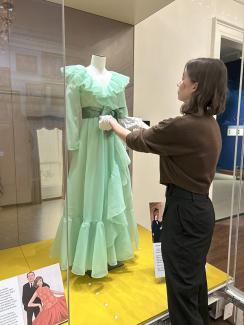 Episode 5: First Lady Pat Nixon's Ferdinando Sarmi Green Chiffon Gown This episode of First Family Fashion our First Family Fashion YouTube channel playlist continues the examination of fashion designer Ferdinando Sarmi’s gowns for First Lady Pat Nixon. As part three of three, this episode focuses on a green chiffon evening gown. | 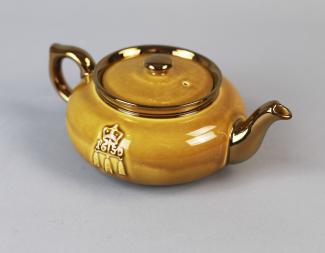 Episode 2: Replica Revolutionary War era teapot; Object Number: D.1973.1855.a-b This episode examines a Davison, Newman & Co. teapot that was gifted to First Lady Pat Nixon. This replica of a Revolutionary War era teapot helps explain the role tea played in early Colonial history leading up to independence. | |
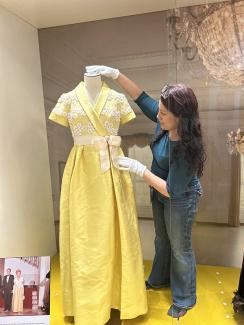 Episode 4: First Lady Pat Nixon's Ferdinando Sarmi Yellow Silk Gown The fourth installment of First Family Fashion on our YouTube channel playlist is the second of three episodes examining the work of fashion designer Ferdinando Sarmi through gowns he created for First Lady Pat Nixon. This video features a floor-length yellow silk noil gown. | 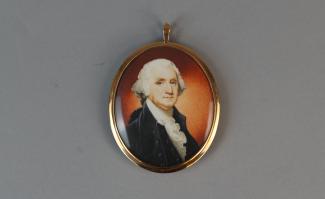 Episode 1: The George Washington Locket; Object Number: HS.1970.120 This episode examines the miniature portrait of George Washington that contains a lock of his hair. This lends to an educational discussion about the significance of hair as mementos in the 1700s and the artistic process of creating miniature portraits. | |
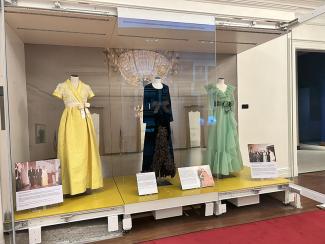 Episode 3: First Lady Pat Nixon's Ferdinando Sarmi Brown Velvet Gown This episode begins the examination of fashion designer Ferdinando Sarmi through gowns he created for First Lady Pat Nixon. In part one of three, this video features a floor-length brown velvet gown. | ||
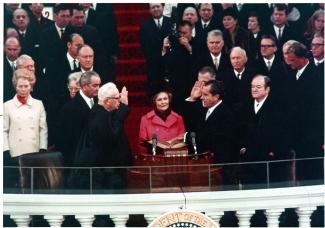 Episode 2: First Lady Pat Nixon's 1969 Inaugural Coat and Dress by Dorothy Farbo for Vincent Mignon | ||
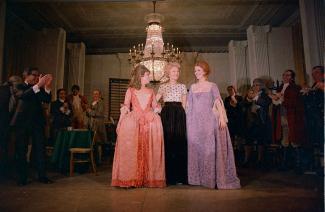 Episode 1: First Lady Pat Nixon's Karen Stark for Harvey Berin Evening Gown |
The Permanent Galleries
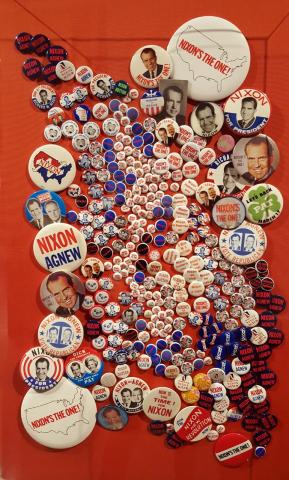
Please Be Aware: The Presidential Helicopter has been removed from exhibit for restoration.
The Museum features 22 unique spaces that incorporate multimedia and interactive technologies. Visitors begin their journey in the Malek Theater with a 13-minute orientation film before entering the permanent galleries in the “Wave of Change” gallery, which covers a period of great upheaval throughout the 1960s and during the months leading up to the November 1968 presidential election.
Travel through President Nixon's presidency and resignation and return to his origins in the “Back to the Beginning” gallery. From there, travel through Nixon’s life and his extraordinary accomplishments prior to becoming the 37th President of the United States.
The journey ends with Richard Nixon’s post-presidency period and his contributions as elder statesman, his impact on American culture, a solemn remembrance of Mr. and Mrs. Nixon’s memorial services, and the short “Epilogue” film at the conclusion of the exhibit.
Orientation Theater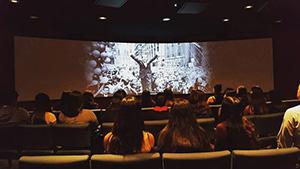 Visitors begin their tour of the new museum by viewing a multi-media presentation that introduces Richard Nixon and his 50-year career in public service. | The Wave of Change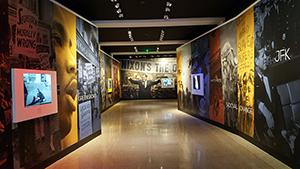 Vivid supergraphics stretch along curving walls as a barrage of sights and sounds brings to life some of the landmark events, people, and images of the years immediately preceding Richard Nixon’s election to the presidency. A "Nixon's the One" mural leads visitors through the election victory of 1968 into President Nixon's first term in office. | The Oval Office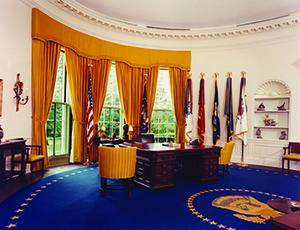 A replica of President Nixon’s Oval Office offers an immersive exploration of the most famous office in the world, including an opportunity to sit behind the president’s desk and take a photo or selfie. | Vietnam War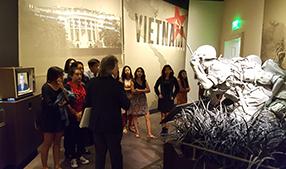 Visitors are confronted with the situation in Vietnam, just as President Nixon was on January 20, 1969. Explore the contentious national conversation surrounding the Vietnam War and President Nixon’s actions and decisions. |
Domestic Policy Vision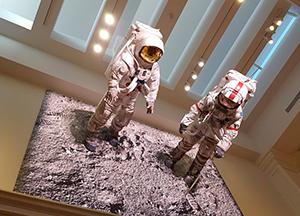 Discover the key ideas of President Nixon’s overall domestic policy, including empowering state and local governments, reorganization of the federal government, and fiscal responsibility. | Communism and the Cold War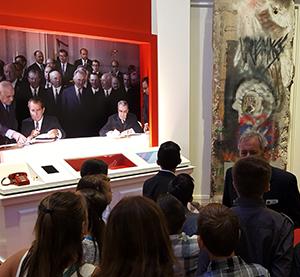 Explore the broader global issues of communism and the Cold War and their role in shaping President Nixon’s policy of détente. A large section of the Berlin Wall is an iconic symbol of the split between the Communist and non-Communist worlds. | First Lady Pat Nixon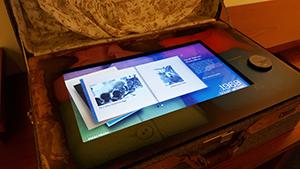 Step into a space that explores Pat Nixon as an influential First Lady and America’s Ambassador of Goodwill. From her world travels to domestic initiatives, Pat Nixon shaped the ongoing progression of the role of the First Lady as an active, welcoming, and vital presence in the White House and throughout the world. | The Week that Changed the World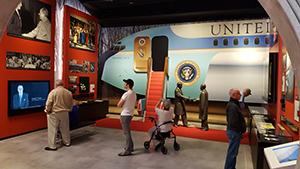 Stepping through an iconic moon gate portal, visitors relive the historic handshake between President Richard Nixon and Chinese Premier Zhou Enlai (Chou En-lai) during the February 1972 trip to the People’s Republic of China. Images, text, and artifacts explore the relationship between the U.S. and China, the events of the Nixons’ time in China, and the legacy of the historic visit. |
Life in the White House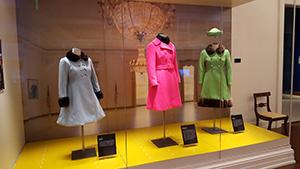 An elegant space designed like a room in the White House highlights the First Family’s daily lives. An interactive experience invites guests to explore some of the events and entertaining that occurred in the Nixon White House, as well information on the Nixon family. Extraordinary state and public gifts, as well as a changing array of gowns and other clothing, from the museum collection are displayed. | The Western White House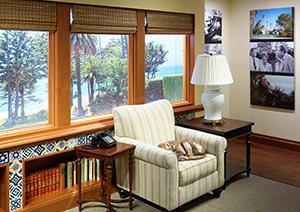 A re-creation of President Nixon’s study at La Casa Pacifica immerses visitors in the life of the working Western White House in San Clemente, California. | The Middle East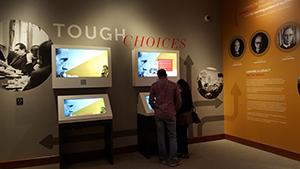 Explore images, artifacts, and interactive technologies highlighting President Nixon's goals and achievements in the Middle East – most notably in regard to the Yom Kippur War – as well as how his policies in the region remain relevant today. | 1972 Campaign & Victory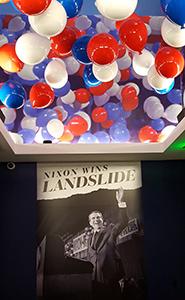 President Nixon’s landslide victory in the 1972 election is captured as a moment in time through the use of object from the museum collection and words from Richard Nixon’s second Inaugural Address. |
Watergate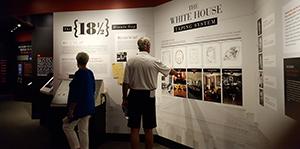 The gallery helps visitors make sense of the web of personalities, actions, and intentions at the heart of the Watergate scandal as it chronicles the events beginning in June 1971 with the leak of the Pentagon Papers and the formation of a clandestine White House group known as "the Plumbers", and ending with former President Richard Nixon’s public explanations of Watergate after he left office. | Farewell Speech and Departure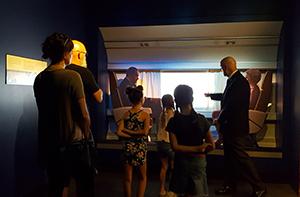 Guests step inside Army One on August 9, 1974 with President and Mrs. Nixon as they depart the White House on the last day of the Nixon presidency. Media in the windows and an audioscape immerse guests in the departure and transition guests back to Richard Nixon's beginnings in Yorba Linda. | Back to the Beginning and Early Years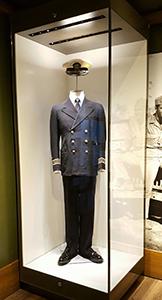 The view from the gallery windows offers a serene view of the humble farmhouse where Richard Nixon was born and spent his earliest years. A gallery of displays and photos tells the story of the future President's family, his childhood, the pivotal meeting with a young teacher named Pat Ryan, and his service in World War II. | Man in the Arena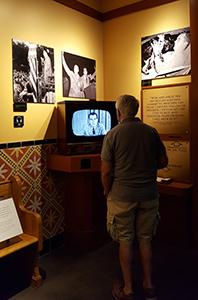 The story of how Richard Nixon's early years prepared him for the many challenges that lay ahead is illustrated in galleries capturing some of the peak moments of the future President’s ambitious career, including his time in Congress, the Fund Crisis of 1952, and the Vice Presidency. |
The 1960 Campaign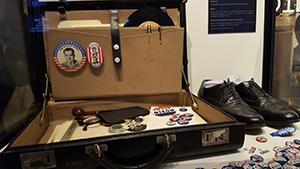 Visitors find themselves on a re-creation of the set for the Nixon/Kennedy televised debates - the first of their kind that would set the tone for decades to come. | The Lincoln Sitting Room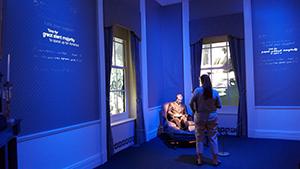 President Nixon’s favorite room in the White House incorporates passages from his legendary yellow legal pad notes that he often penned in the intimate space. | The Eagle's Nest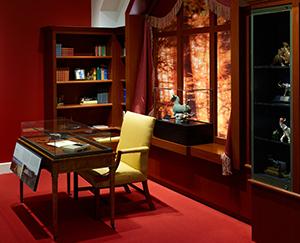 In a realistic re-creation of Nixon's New Jersey study, visitors begin their exploration of Nixon's work as America’s Elder Statesman from 1974 to 1994. | Nixon in Popular Culture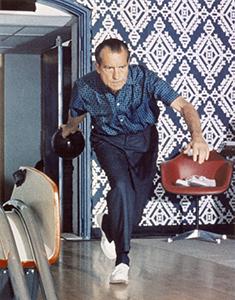 From books to film, television, drama, opera, and more, Richard Nixon left a lasting mark on American culture. In this fun display, guests can explore both Nixon's own contributions through his 10 books and others' interpretations of the man and his legacy in popular culture. |
Saying Goodbye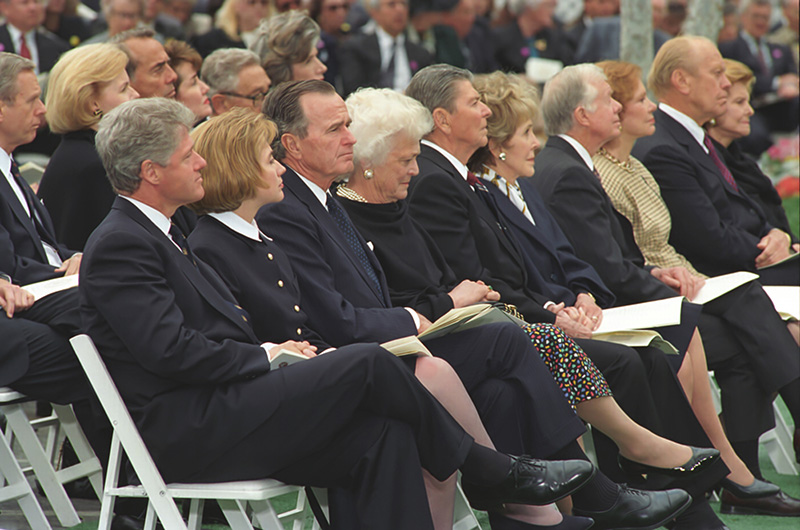 A moving look at the deaths and funerals of both Richard and Pat Nixon including video excerpts of the former President's funeral attended by all of the living U.S. Presidents. | Epilogue President Nixon’s own voice provides words of inspiration to send guests onward. |
The museum also features:
- 70 new family-friendly exhibits with more than 300 original artifacts
- 30 unique multimedia experiences
- 11 original films
- 12 custom digital interactives
- 10 curated archival film sequences
- More than 600 photographs
- 8,000 square feet of wall murals
Beyond the Galleries
The Richard Nixon Presidential Library and Museum is also home to the museum gardens and the birthplace of Richard Nixon.
The Pat Nixon Gardens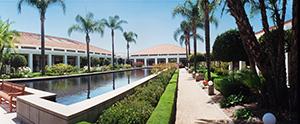 The gardens are comprised of the Buzz Aldrin Moon Walk Plaza, California Formal Garden, Frank Nixon Citrus Grove, Oestricher Garden Glen, First Lady's Rose Garden, 1912 California Pepper Tree, Birthplace Garden, and the Pat Nixon Amphitheater. The gardens are also the final resting place of President Richard Nixon and First Lady Pat Nixon. Guided tours are available from the Nixon Library Docent Guild. LEARN MORE | The Birthplace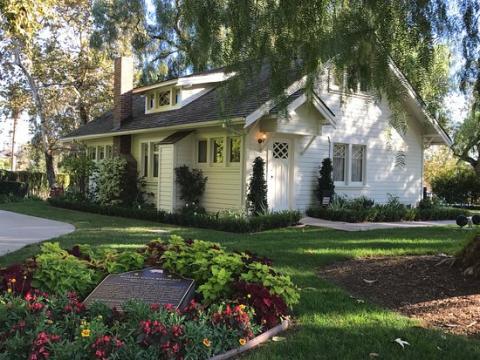 President Nixon was born on January 9, 1913, in this house, which his father, Frank Nixon, built in 1912. Frank Nixon and his wife, Richard's mother Hannah, ran a citrus ranch on the surrounding land. The Nixon family lived in this house until 1922, when the ranch became unprofitable and they moved to Whittier, California. The house then passed through a succession of owners. In around 1948, the Yorba Linda School District bought the structure and it became a residence for the custodian of what later was named the Richard Nixon Elementary School, which was located next door until its demolition in 1988. In 1959, the school board and the citizens of Yorba Linda designated the house as a historic site. In 1990, it became a part of the private Richard Nixon Library and Birthplace, the antecedent of today's federal Richard Nixon Presidential Library and Museum. The birthplace is open to visitors, who must be accompanied by a docent on their tour. The birthplace may be closed due to inclement weather, including rain, wind, and excessive heat. Please contact us on the day of your visit to inquire of its status. |
Click HERE to learn more about the museum's hours, admission prices, and directions.