
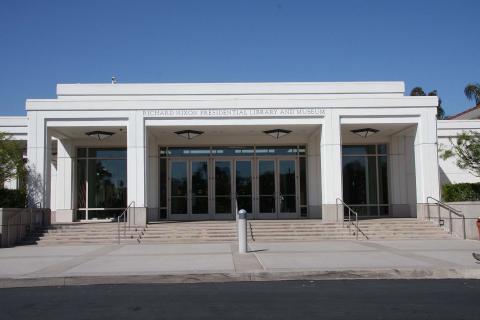
Introduction
This almanac page for Wednesday, December 13, 1972, pulls together various records created by the federal government and links to additional resources which can provide context about the events of the day.
Previous Date: Tuesday, December 12, 1972
Next Date: Thursday, December 14, 1972
Schedule and Public Documents
The Daily Diary files represent a consolidated record of the President's activities. Visit the finding aid to learn more.
The President's day began at The White House - Washington, D. C.
The Weekly Compilation of Presidential Documents made available transcripts of the President's news conferences; messages to Congress; public speeches, remarks, and statements; and other Presidential materials released by the White House.
Digitized versions can be found at HathiTrust.
The Federal Register is the official daily publication for rules, proposed rules, and notices of federal agencies and organizations, as well as executive orders and other Presidential documents.
Archival Holdings
Any selection of archival documents will necessarily be partial. You should use the documents and folders identified below as a starting place, but consult the linked collection finding aids and folder title lists and the collections themselves for context. Many documents to be found this way do not lend themselves to association with specific dates, but are essential to a complete understanding of the material.
Selective document listing
President's Office Files
The President's Office Files consists of materials drawn together by the Special Files Unit from several administrative subdivisions within the White House Office. It is the handwriting and sensitive papers sent to the Staff Secretary that now comprise much of the President's Office Files. Visit the finding aid to learn more.
- News Summaries, Annotated News Summaries, Box 41, Dec. 1972 [2 of 5] [Note: Due to the way News Summary products were compiled, you should also consult nearby days for potentially relevant materials.]
- News Summary, December 13, 1972, (Tues. networks, wires)
- President's Daily Schedule, Box 102, [President's Daily Schedule, Oct.-Dec. 1972] [2 of 2]
- The President's Schedule, Wednesday - December 13, 1972
The H. R. Haldeman Diaries consists of seven handwritten diaries, 36 dictated diaries recorded as sound recordings, and two handwritten audio cassette tape subject logs. The diaries and logs reflect H. R. Haldeman’s candid personal record and reflections on events, issues, and people encountered during his service in the Nixon White House. As administrative assistant to the President and Chief of Staff, Haldeman attended and participated in public events and private meetings covering the entire scope of issues in which the Nixon White House engaged in during the years 1969-1973. Visit the finding aid to learn more.
- Transcript of diary entry (PDF)
Wednesday, December 13. Got into a lot of personnel items. Still don't have the answer on Hodgson taking the EEC, but the President wants to move Greenwald out in any event. The President will not move on Frances Knight, even though Rogers thinks it's time to get her out of the passport office. Wants Kissinger to call Graham Martin and sell him on going to Saigon. Wants Mitchell to back up Webster for the IRS. He won't take Shultz's objections on that and doesn't want the subject raised with him. Talked with Dan Parker at the reception last night, and says he wants to do something in the AAID field, so we should offer him the Hannah post. Also, Ross (the Ohio Chairman) wants a full-time job and should be considered as the RNC Deputy. Got into the question of the Schlesinger clearance with Stennis and wants to have someone else handle that. Concerned about Bob Wilson's plan to go for the campaign chairmanship. Wants to pull the VP off of the Bicentennial. Feels that Breniger isn't going to be able to hack it because of a certain brittle quality and his necessity of constantly having to tell you how good he is. Agreed with Ehrlichman's recommendation to move Pottenger to Civil Rights at Justice, from his post at HEW. Got into the general point on changes on reorganization, in that we should go for the fact and not the headlines, because we should not create a big story that raises a Hill flap. Told Ehrlichman to think of a plan for the PR on it, call Congress in and explain it to them first. Find some way, thereby, to avoid a flap, especially with the Democrats. Ziegler moved in on the Julie deal today. The President told him to call Pat Nixon and meet with her and Julie this afternoon and try to get it settled, which Ron did and it worked out very well. Agreed that we'll do it on the basis of Julie being an assistant to the First Lady and putting a press assistant in also, like Helen Smith or someone else that Ziegler would work with to take some of the barbs and so on. And apparently Ron-- in an hour and a half session -- sold it completely to them, so we've now got that on track. - Original audio recording (MP3)
The National Archives Catalog is the online portal to the records held at the National Archives, and information about those records. It is the main way of describing our holdings and also provides access to electronic records and digitized versions of our holdings.
The Catalog searches across multiple National Archives resources at once, including archival descriptions, digitized and electronic records, authority records, and web pages from Archives.gov and the Presidential Libraries. The Catalog also allows users to contribute to digitized historical records through tagging and transcription.
Nixon Library Holdings
All National Archives Units
National Security Documents
The President's Daily Brief is the primary vehicle for summarizing the day-to-day sensitive intelligence and analysis, as well as late-breaking reports, for the White House on current and future national security issues. Read "The President's Daily Brief: Delivering Intelligence to Nixon and Ford" to learn more.
The Foreign Relations of the United States series presents the official documentary historical record of major U.S. foreign policy decisions and significant diplomatic activity. Visit the State Department website for more information.
Vol. IX, Vietnam, October 1972-January 1973
Paris Negotiations Collapse, October 24-December 13, 1972
167. Message From the President’s Deputy Assistant for National Security Affairs (Haig) to the President’s Assistant for National Security Affairs (Kissinger) in Paris, Washington, December 13, 1972, 0217Z
Source: National Archives, Nixon Presidential Materials, NSC Files, Kissinger Office Files, Box 27, HAK Trip Files, HAK Paris Trip, Tohak 100–192, December 3–13, 1972. Top Secret; Sensitive; Exclusively Eyes Only. Sent via Lord. Written on December 12.
168. Message From the President’s Deputy Assistant for National Security Affairs (Haig) to the President’s Assistant for National Security Affairs (Kissinger) in Paris, Washington, December 13, 1972, 1425Z
Source: National Archives, Nixon Presidential Materials, NSC Files, Kissinger Office Files, Box 27, HAK Trip Files, HAK Paris Trip Tohak 100–192, December 3–13, 1972. Top Secret; Flash; Sensitive; Exclusively Eyes Only. Sent via Guay.
169. Message From the President’s Deputy Assistant for National Security Affairs (Haig) to the President’s Assistant for National Security Affairs (Kissinger) in Paris, Washington, December 13, 1972, 1720Z
Source: National Archives, Nixon Presidential Materials, NSC Files, Kissinger Office Files, Box 27, HAK Trip Files, HAK Paris Trip Tohak 100–192, December 3–13, 1972. Top Secret; Flash; Exclusively Eyes Only. Sent via Guay and Lord.
170. Message From the President’s Deputy Assistant for National Security Affairs (Haig) to the President’s Assistant for National Security Affairs (Kissinger) in Paris, Washington, December 13, 1972, 1835Z
Source: National Archives, Nixon Presidential Materials, NSC Files, Kissinger Office Files, Box 27, HAK Trip Files, HAK Paris Trip Hakto and Memos to Pres., etc., December 3–13, 1972. Top Secret; Flash; Sensitive; Exclusively Eyes Only. Sent via Guay.
171. Message From the President’s Assistant for National Security Affairs (Kissinger) to the President’s Deputy Assistant for National Security Affairs (Haig), Paris, December 13, 1972, 1838Z
Source: National Archives, Nixon Presidential Materials, NSC Files, Box 858, For the President’s Files (Winston Lord)—China Trip/Vietnam, Sensitive Camp David, Vol. XXII (2). Top Secret; Flash; Sensitive; Exclusively Eyes Only. Sent via Guay.
172. Message From the President’s Deputy Assistant for National Security Affairs (Haig) to the President’s Assistant for National Security Affairs (Kissinger), Washington, December 13, 1972, 2320Z
Source: National Archives, Nixon Presidential Materials, NSC Files, Kissinger Office Files, Box 27, HAK Trip Files, HAK Paris Trip Tohak 100–192 December 3–13, 1972. Top Secret; Sensitive; Exclusively Eyes Only. Sent via Lord.
173. Memorandum From the President’s Deputy Assistant for National Security Affairs (Haig) to the President’s Assistant for National Security Affairs (Kissinger), Washington, December 13, 1972
Source: National Archives, Nixon Presidential Materials, NSC Files, Kissinger Office Files, Box 27, HAK Trip Files, HAK Paris Trip Hakto and Memos to Pres., etc., December 3–13, 1972. Top Secret; Sensitive; Exclusively Eyes Only.
Vol. XX, Southeast Asia, 1969-1972
Thailand
184. Memorandum From John H. Holdridge and Richard T. Kennedy of the National Security Council Staff to the President’s Assistant for National Security Affairs (Kissinger), Washington, December 13, 1972
Source: National Archives, Nixon Presidential Materials, NSC Files, Box 565, Country Files, Far East, Thailand, Vol. IX. Secret; Sensitive. Sent for information. A notation on the memorandum indicates that Kissinger saw it.
Vol. XLII, Vietnam: The Kissinger-Le Duc Tho Negotiations
Breakdown of Negotiations, November 1972-December 1972
41. Memorandum of Conversation, Paris, December 13, 1972, 10:30 a.m.-4:24 p.m.
Source: National Archives, Nixon Presidential Materials, NSC Files, Box 865, For the President’s Files (Winston Lord)—China Trip/Vietnam Negotiations, Camp David Memcons, December 1972 [1 of 3]. Top Secret; Sensitive; Exclusively Eyes Only. The meeting took place at 31 Boulevard de la Saussaye, Neuilly-sur-Seine. All brackets are in the original. Tab A is attached but not printed.
A paper by NSC staffer John Negroponte, prepared for Kissinger on December 14, summarized “Hanoi’s negotiating behavior both in substance and procedure” in the negotiations since their reopening on November 20. Negroponte concluded that “Hanoi has no intention to meet any of the basic requirements that we made clear to them at the end of October; and through a series of irritating dilatory tactics has pursued a course which can be interpreted as desire to achieve either no agreement at all or an agreement substantially worse than that achieved in late October. Hanoi’s tactics have been clumsy, blatant, and fundamentally contemptuous of the United States.” (Foreign Relations, 1969–1976, vol. IX, Vietnam, October 1972–January 1973, Document 174)
Kissinger flew back to Washington on December 13, and he, Nixon, and Haig met the next morning to decide on a course of action. As Kissinger summarized: “We are now in this position: as of today, we are caught between Hanoi and Saigon, both of them facing us down in a position of total impotence, in which Hanoi is just stringing us along, and Saigon is just ignoring us. Hanoi—I do not see why Hanoi would want to settle three weeks from now when they didn’t settle this week. I do not see what additional factors are going to operate. I’m making a cold-blooded analysis.”
Gradually, a consensus emerged at the meeting that if Saigon absolutely rejected the settlement, the United States would be forced to deal directly with Hanoi to achieve a bilateral agreement, and leave South Vietnam to go it alone. But first the United States would unleash a massive air campaign to shock the North Vietnamese into the minimal concessions necessary to reach an agreement.
Given the threat of Congressional action to cut off funding for the war, Kissinger suggested: “Now, I would recommend that we leave open the possibility of this settlement, if the other side meets the very minimum conditions that we have indicated. I would then recommend that we start bombing the bejeezus out of them within 48 hours of having put the negotiating record out. And I would then recommend that after about two weeks of that, we offer withdrawal for prisoners, about the time that the Congress comes back and say, ʻIt is now been proved that the—the negotiation’s too complex involving all the Vietnamese parties. Let them settle their problems among each other. The South is strong enough to defend itself.’”
The course of action selected in the end was to conduct an all-out air offensive against the North Vietnamese heartland. If the North Vietnamese had not offered the necessary concessions by December 28, the United States would move to propose a bilateral deal with Hanoi: the return of U.S. prisoners of war and an end to the bombing, in exchange for U.S. withdrawal from the war. While Kissinger and Haig focused on the strategic aspects of the decision, Nixon repeatedly worked through the political implications of the renewed bombing and the means by which it could be explained to the U.S. people. (Ibid., Document 175)
Senior planners on the Joint Chiefs of Staff, at the direction of the Chairman, Admiral Thomas Moorer, had previously prepared and recently updated contingency plans for the bombing. U.S. forces, therefore, could begin the bombing, officially called Operation Linebacker II, in a matter of days. For documentation on the planning, see ibid., Documents 132, 149, 164, 169, 176, and 184.
Despite the increasing willingness to go it alone, Nixon wanted to give Thieu another opportunity to accept the agreement in return for continued U.S. support. To this end he sent Haig to Saigon to meet with Thieu and personally deliver a letter from him regarding America’s determination to go it alone if Thieu did not accept the agreement. The letter, drafted by Kissinger and revised by Nixon, is printed ibid., Document 189. Haig later characterized the letter as being “brutally frank.” (Haig, Inner Circles, p. 309) Haig saw Thieu on December 19 and 20. Thieu remained noncommittal on the agreement, despite the sustained pressure imposed by Nixon over the previous months. For Haig’s reports on the meetings, including the text of a letter from Thieu to Nixon, see Foreign Relations, 1969–1976, vol. IX, Vietnam, October 1972–January 1973, Documents 197, 198, and 206.
The bombing began on December 18 and continued until December 29, with a 36-hour break at Christmas. For contrasting narratives of the course of the bombing and its impact on the negotiations, see Kissinger, White House Years, pp. 1446–1461, and Luu and Nguyen, Le Duc Tho-Kissinger Negotiations in Paris, pp. 415–422.
Vol. E-1, Documents on Global Issues, 1969-1972
U.S. Policy Towards Terrorism, Hijacking of Aircraft, and Attacks on Civil Aviation: The Olympic Attack and the Anti-Terrorism Initiatives, September−December 1972
119. Telegram 5526 From the Mission to the United Nations to the Mission to the North Atlantic Treaty Organization, New York, December 13, 1972, 0052Z
Text of the terrorism item as adopted by the UN General Assembly.
Source: National Archives, RG 59, Central Files 1970-73, POL 23-8. Unclassified; Immediate. Repeated to the Department of State.
Vol. E-5, Part 2, Documents on North Africa, 1969-1972
Libya
96. Memorandum From the Deputy Assistant Secretary of State for African Affairs (Ross) to Armin H. Meyer of the Office of the Secretary, Washington, December 13, 1972
Ross acknowledged the links between Libyan leaders and terrorism, while passing along a report that noted Tripoli’s doubts over the benefits of terrorist tactics.
Source: National Archives, RG 59, Central Files 1970–73, POL 23–8 LIBYA. Secret.
The Kissinger telephone conversation transcripts consist of approximately 20,000 pages of transcripts of Kissinger’s telephone conversations during his tenure as Assistant to the President for National Security Affairs (1969-1974) and Secretary of State (1973-1974) during the administration of President Richard Nixon. Visit the finding aid for more information.
Digitized versions can be found in the National Archives Catalog.
Audiovisual Holdings
Visit the White House Tapes finding aid to learn about the taping system's operation and archival processing.
Old Executive Office Building
- 381-1; 10:54 a.m. - 12:25 p.m.; Nixon, Richard M. (President); Haldeman, H. R. ("Bob"); Ziegler, Ronald L.; Haig, Alexander M., Jr.; [Unknown person(s)]
- 381-2; Unknown between 12:25 p.m. & 12:28 p.m.; Nixon, Richard M. (President); Haig, Alexander M., Jr.
- 381-3; 12:28 p.m. - 1:12 p.m.; Nixon, Richard M. (President); Haig, Alexander M., Jr.; Sanchez, Manolo
- 381-4; Unknown between 1:12 p.m. & 2:48 p.m.; Nixon, Richard M. (President); White House operator
- 381-5; Unknown between 1:12 p.m. & 2:48 p.m.; Nixon, Richard M. (President); Sanchez, Manolo
- 381-6; Unknown between 1:12 p.m. & 2:48 p.m.; Nixon, Richard M. (President); Sanchez, Manolo
- 381-7; Unknown between 1:12 p.m. & 2:48 p.m.; Nixon, Richard M. (President); Sanchez, Manolo
- 381-8; Unknown between 1:12 p.m. & 2:48 p.m.; Nixon, Richard M. (President); Sanchez, Manolo
- 381-9; Unknown between 1:12 p.m. & 2:48 p.m.; Nixon, Richard M. (President); [Unknown person(s)]
- 381-10; Unknown between 1:12 p.m. & 2:48 p.m.; Nixon, Richard M. (President); Sanchez, Manolo
- 385-24; Unknown between 9:27 a.m. & 10:00 a.m.; Nixon, Richard M. (President); [Unknown person(s)]
- 385-25; Unknown between 9:27 a.m. & 10:00 a.m.; Nixon, Richard M. (President); Sanchez, Manolo
- 385-26; 10:00 a.m. - 10:00 a.m.; Nixon, Richard M. (President); White House operator
- 385-27; 10:03 a.m. - 10:50 a.m.; Nixon, Richard M. (President); Haig, Alexander M., Jr.; [Unknown person(s)]
- 385-28; Unknown between 10:50 a.m. & 10:54 a.m.; Nixon, Richard M. (President); Sanchez, Manolo
- 385-29; Unknown between 10:50 a.m. & 10:54 a.m.; Nixon, Richard M. (President); [Unknown person(s)]
- 385-30; Unknown between 10:54 a.m. & 11:21 a.m.; Nixon, Richard M. (President); Haldeman, H. R. ("Bob"); White House operator; Eisenhower, Julie Nixon
Oval Office
- 822-1; Unknown between 12:01 a.m. & 2:48 p.m.; Nixon, Richard M. (President); Haig, Alexander M., Jr.
- 822-2; Unknown between 2:48 p.m. & 2:57 p.m.; Nixon, Richard M. (President); Sanchez, Manolo
- 822-3; Unknown between 2:48 p.m. & 2:57 p.m.; Nixon, Richard M. (President); [Unknown person(s)]
- 822-4; Unknown between 2:48 p.m. & 2:57 p.m.; Nixon, Richard M. (President); Bull, Stephen B.
- 822-5; 2:57 p.m. - 3:07 p.m.; Nixon, Richard M. (President); Walker, Ronald H.; Chapin, Dwight L.; Bull, Stephen B.; White House photographer
- 822-6; 3:08 p.m. - 3:47 p.m.; Nixon, Richard M. (President); Armstrong, Anne L.; Haldeman, H. R. ("Bob"); Bull, Stephen B.
- 822-7; Unknown between 3:47 p.m. & 3:48 p.m.; Nixon, Richard M. (President); Bull, Stephen B.
- 822-8; 3:48 p.m. - 4:13 p.m.; Nixon, Richard M. (President); Shultz, George P.; Cohen, Edwin S.; Engman, Lewis A.
- 822-9; Unknown between 4:13 p.m. & 4:15 p.m.; Nixon, Richard M. (President); White House operator
- 822-10; Unknown between 4:13 p.m. & 4:15 p.m.; Nixon, Richard M. (President); Bull, Stephen B.
- 822-11; 4:15 p.m. - 4:55 p.m.; Nixon, Richard M. (President); Jackson, Henry M. ("Scoop"); Sanchez, Manolo; White House operator; Bull, Stephen B.; Friedman, Milton
- 822-12; Unknown between 4:53 p.m. & 6:09 p.m.; Nixon, Richard M. (President); Bull, Stephen B.; Sanchez, Manolo; Butterfield, Alexander P.; Ehrlichman, John D.; Haldeman, H. R. ("Bob"); [Unknown person(s)]
- 822-13; Unknown between 6:09 p.m. & 11:59 p.m.; Bull, Stephen B.; [Unknown person(s)]
- 822-14; Unknown between 6:09 p.m. & 11:59 p.m.; Bull, Stephen B.; [Unknown person(s)]
- 822-15; Unknown between 12:01 a.m. & 2:48 p.m.; [Unknown person(s)]
- 822-16; Unknown between 6:09 p.m. & 11:59 p.m.; United States Secret Service agents
White House Telephone
- 34-58; 10:00 a.m. - 10:00 a.m.; Nixon, Richard M. (President); White House operator
- 34-59; Unknown between 10:54 a.m. & 11:19 a.m.; Nixon, Richard M. (President); White House operator
- 34-60; 11:19 a.m. - 11:21 a.m.; Nixon, Richard M. (President); Eisenhower, Julie Nixon
- 34-61; 11:22 a.m. - 11:22 a.m.; Haldeman, H. R. ("Bob"); White House operator
- 34-62; 11:26 a.m. - 11:28 a.m.; Nixon, Richard M. (President); Haig, Alexander M., Jr.
- 34-63; Unknown between 4:13 p.m. & 4:15 p.m.; Nixon, Richard M. (President); White House operator
- 34-64; Unknown between 4:15 p.m. & 4:47 p.m.; Nixon, Richard M. (President); White House operator
- 34-65; 4:47 p.m. - 4:48 p.m.; Nixon, Richard M. (President); Friedman, Milton
- 34-66; Unknown between 4:48 p.m. & 11:59 p.m.; Nixon, Richard M. (President); White House operator
- 34-67; 8:51 p.m. - 8:54 p.m.; Nixon, Richard M. (President); Ziegler, Ronald L.; Sanchez, Manolo
- 34-68; Unknown between 8:54 p.m. & 8:55 p.m.; Nixon, Richard M. (President); White House operator
- 34-69; 8:55 p.m. - 9:07 p.m.; Nixon, Richard M. (President); Haig, Alexander M., Jr.
The White House Photo Office collection consists of photographic coverage of President Richard Nixon meeting with prominent social, political, and cultural personalities; speaking engagements and news conferences of the President and various high-ranking members of the White House staff and Cabinet; Presidential domestic and foreign travel, including Presidential vacations; social events and entertainment involving the First Family, including entertainers present; official portraits of the President, First Family, and high-ranking members of the Nixon administration; the 1969 and 1973 Inaugurals; the President’s 1972 Presidential election campaign appearances (including speeches) and other official activities of the White House staff and the President’s Cabinet from January 20, 1969 until August 9, 1974 at the White House and the Old Executive Office Building; other locations in Washington, DC, such as The Mall; and the Presidential retreats in Camp David, Maryland, Key Biscayne, Florida, and San Clemente, California. Visit the finding aid to learn more.
Roll WHPO-D1098 Photographer: Knudsen, Robert L. | Color or B&W: B&W
- Frame(s): WHPO-D1098-03-04, President Nixon standing with Ronald Walker. 12/13/1972, Washington, D.C. White House, Oval Office. President Nixon, Ronald Walker, Anne Armstrong, Chapin, Haldeman.
- Frame(s): WHPO-D1098-05-07, President Nixon seated at his desk during a meeting with Ron Walker and Dwight Chapin. 12/13/1972, Washington, D.C. White House, Oval Office. President Nixon, Ronald Walker, Dwight Chapin.
- Frame(s): WHPO-D1098-10-13, President Nixon standing with Mrs. Anne Armstrong, Co-chairman of the Republican National Committee. 12/13/1972, Washington, D.C. White House, Oval Office. President Nixon, Anne Armstrong.
- Frame(s): WHPO-D1098-14-16, President Nixon seated at his desk during a meeting with Mrs. Anne Armstrong, Co-chairman of the Republican National Committee, and H.R. Haldeman. 12/13/1972, Washington, D.C. White House, Oval Office. President Nixon, Anne Armstrong, H.R. Haldeman.
Roll WHPO-D1099 Photographer: Royer | Color or B&W: B&W
- Frame(s): WHPO-D1099-, Alexander Haig presenting an award to Melvin Dockett. 12/13/1972, Washington, D.C. unknown. Alexander Haig, Melvin Dockett, Dockett family member, unidentified man.
Roll WHPO-D1100 Photographer: Royer | Color or B&W: B&W
- Frame(s): WHPO-D1100-07-12, Deputy Special Assistant John E. Nidecker receiving a framed photo from two unidentified women. 12/13/1972, Washington, D.C. unknown. John E. Nidecker, unidentified women.
Roll WHPO-D1101 Photographer: Royer | Color or B&W: Color
- Frame(s): WHPO-D1101-05-07, Mrs. Ehrlichman (mother of John Ehrlichman) and an unidentified woman (White House staff member possibly) standing in front of the Blue Room White House Christmas tree. 12/13/1972, Washington, D.C. Blue Room, White House. Mrs. Ehrlichman, unidentified woman.
Roll WHPO-D1102 Photographer: Kightlinger, Jack | Color or B&W: Color
- Frame(s): WHPO-D1102-03-10, Julie Nixon Eisenhower standing by a large natural pine Christmas wreath gift donated by Oshkosh Warrior Drum and Bugle Corps. 12/13/1972, Washington, D.C. East Wing Reception Room, White House. Julie Eisenhower.
The White House Communications Agency Sound Recordings Collection contains public statements that took place between 1969 and 1974. Visit the finding aid to learn more.
L - White House Press Office Briefings
- WHCA-SR-L-086
Press briefing by Ronald Ziegler. (12/13/1972, White House Press Lobby)
Runtime: 17:00
Keywords: Press conferences, news conferences, interviews, media, press secretary
Original Format: 1/4-inch reel-to-reel audiotape. Original source type: Original. - WHCA-SR-L-087
Press briefing by Ronald Ziegler on the Paris peace talks. (12/13/1972, White House Press Lobby)
Runtime: 4:00
Keywords: Press conferences, news conferences, interviews, media, press secretary
Original Format: 1/4-inch reel-to-reel audiotape. Original source type: Original.
The White House Communications Agency Videotape Collection contains “off-the-air” recordings of televised programs produced between 1968 and 1974. Visit the finding aid to learn more.
- WHCA-5948
Weekly News Summary, Tape II.
ALL NETWORKS
Runtime: 1:30
5. Reasoner/Rolfson/Jarriel: Kissinger to leave Paris peace talks; South Vietnam's President Thieu resists peace terms. Time Code Start: 13:15. Keywords: Presidents, speeches, statements, Paris Peace Talks, Vietnam War, treaty, treaties, negotiations, government, officials, travel, trips, departures. Network: ABC.
6. Smith: Commentary on ruin ahead?. Time Code Start: 17:44. Keywords: politics, reports. Network: ABC.
7. Chancellor/Dobyns/Valeriani: Paris peace talks; Kissinger to return to Washington; Vietnam. Time Code Start: 19:33. Keywords: Paris Peace Talks, Vietnam War, treaty, treaties, negotiations, government, officials, travel, trips. Network: NBC.
8. Chancellor/Nessen: James Keogh goes to United States Information Agency (USIA); Congress is upset over President Nixon's veto of clean water bill with Muskie and Environmental Protection Agency (EPA) Administrator Ruckelshaus. Time Code Start: 24:43. Keywords: Presidents, bills, laws, vetoes, cabinet, advisors, agencies, directors, ecology, water pollution, pollutants, litter, sludge, contamination. Network: NBC.
9. Cronkite/Fenton: Kissinger to return to Washington. Time Code Start: 28:19. Keywords: cabinet, advisors, travel, trips. Network: CBS.
10. Rather/Kalb: More on peace talks with Ziegler. Time Code Start: 31:10. Keywords: Paris Peace Talks, Vietnam War, treaty, treaties, negotiations, media, press conferences, news conferences, interviews. Network: CBS.
11. Sevareid: Commentary on political re-evaluation of the major politicians. Time Code Start: 33:18. Keywords: politics, Senators, Congressmen, evalutations. Network: CBS.
Context (External Sources)
The Vanderbilt Television News Archive is the world's most extensive and complete archive of television news. They have been recording, preserving and providing access to television news broadcasts of the national networks since August 5, 1968.
Wikipedia is a free encyclopedia that anyone can edit.