
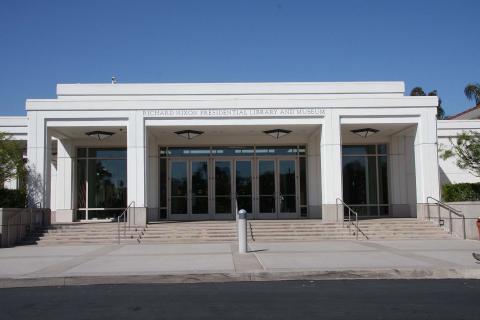
Introduction
This almanac page for Wednesday, October 20, 1971, pulls together various records created by the federal government and links to additional resources which can provide context about the events of the day.
Previous Date: Tuesday, October 19, 1971
Next Date: Thursday, October 21, 1971
Schedule and Public Documents
The Daily Diary files represent a consolidated record of the President's activities. Visit the finding aid to learn more.
The President's day began at The White House - Washington, D. C.
The Weekly Compilation of Presidential Documents made available transcripts of the President's news conferences; messages to Congress; public speeches, remarks, and statements; and other Presidential materials released by the White House.
Digitized versions can be found at HathiTrust.
The Federal Register is the official daily publication for rules, proposed rules, and notices of federal agencies and organizations, as well as executive orders and other Presidential documents.
The Congressional Record is the official daily record of the debates and proceedings of the U.S. Congress.
Archival Holdings
Any selection of archival documents will necessarily be partial. You should use the documents and folders identified below as a starting place, but consult the linked collection finding aids and folder title lists and the collections themselves for context. Many documents to be found this way do not lend themselves to association with specific dates, but are essential to a complete understanding of the material.
Selective document listing
President's Office Files
The President's Office Files consists of materials drawn together by the Special Files Unit from several administrative subdivisions within the White House Office. It is the handwriting and sensitive papers sent to the Staff Secretary that now comprise much of the President's Office Files. Visit the finding aid to learn more.
- News Summaries, Annotated News Summaries, Box 31, News Summaries - October 13-20, 1971 [4 of 4] [Note: Due to the way News Summary products were compiled, you should also consult nearby days for potentially relevant materials.]
- News Summary, October 20, 1971, (Tuesday newscasts, wires, columns, mags)
- President's Daily Schedule, Box 102, [President's Daily Schedule, Sept.-Dec. 1971] [2 of 3]
- The President's Schedule, Wednesday - October 20, 1971
The H. R. Haldeman Diaries consists of seven handwritten diaries, 36 dictated diaries recorded as sound recordings, and two handwritten audio cassette tape subject logs. The diaries and logs reflect H. R. Haldeman’s candid personal record and reflections on events, issues, and people encountered during his service in the Nixon White House. As administrative assistant to the President and Chief of Staff, Haldeman attended and participated in public events and private meetings covering the entire scope of issues in which the Nixon White House engaged in during the years 1969-1973. Visit the finding aid to learn more.
- Transcript of diary entry (PDF)
Wednesday, October 20th. The President started the day this morning by calling Malek and me in to ask whether any of our recent high-level women appointees are lawyers, and if so, how many years they have practiced, and so on. This obviously relating to his decision on the two Supreme Court appointments.
Later in the morning, Ziegler came in for guidance on how to handle Court questions in the briefing. The principal question being whether the appointments would be this week. The President told him to answer that the AG has submitted the names for the advice of the ABA, that their recommendations will be considered but they will not be final, and the nominations will be coming forward in due course. For guidance, he told Ron that we may make it this week but he's not sure. And he said that he could use the point that the ABA is meeting later than we thought they would on the, to review the recommendations. He told Ron to say that, in fairness, he should remind them that the President said not to speculate, and that the stories regarding only six candidates were erroneous, and he told Ron to play it loose. He also told him to use a phrase regarding the ABA, on the point that after the experience that we've had on this nomination, we're not going to have nominees in the future pilloried by the press without having his side adequately presented first, so we will not submit future names to the ABA.
The President made several allusions during the day to the plans for nominations, but never said anything specific and made the point that he wasn't going to tell anybody this time, which apparently also includes me. Late this afternoon, he called to say, rather triumphantly, that he'll announce both nominations tomorrow night at 7:30. He wants Ziegler to make that announcement to the press immediately. I called Ron and told him so, and he felt that he wanted to hold up until tomorrow, because he's got the press thoroughly confused on the thing now, and he wants to let that story run tomorrow, and then, at the 11:00 briefing tomorrow morning, say that the President will go on television tomorrow night. I told Ron to go over and talk to the President about that, and he did, and the President agreed to the change.
The President then called me again to say that he needed a fast writer to help on his text for tomorrow night, so should we, so, so, so should enlist Safire. He said he wouldn't tell him tonight who the nominees would be, he could get started on that tomorrow. But in the meantime, the line would be of the vital importance of the Court, the effect the Court has, that there were many good people recommended, the two I've chosen are the best qualified, etcetera. He seems to be pretty pleased about the nominations. I think he's going for people who have not been on the list of six that was submitted to the ABA and probably who have not been speculated much about. My own guess would be that it would be the fellow from Virginia who is the former head of the American Bar Association, I can't remember his name, and Howard Baker, although I think it might well be one of those two plus Mulligan from New York. The theory on the woman is that the ABA is not going to approve her, and therefore, he'll let her pass and blame them for it.
We also had a discussion on the Secretary of Agriculture appointment. The Malek staff recommendation being Senator Bellman, with Earl Butz as second choice. His crew all rule out Louie Nunn completely. The President, at first, at first glance, ruled out Bellman and said to take Butz. Then the more he got to thinking about it and listened to the argument on it, he decided to talk to Harlow. He called him and ended up buying Bryce's argument that Butz is a Benson symbol and that the President's question on Bellman, whether he understands the intricacies, is not a problem—Harlow assures him that he does. So he told me to try to sell Mitchell on Bellman. I called John, and he doesn't buy him at all. He’s still holding out for Louie Nunn.
We got into the problem of Bill Rogers's feeling that he should take a trip to Moscow to set up the President's trip in the same way that Henry, that Henry's doing in Peking. The President is adamant that he is not to do this. He talked to me first...
-------------------------------------------------------------------------------------------------------------------
DECLASSIFIED - E.O. 13526, Sect. 3.4: by MS, NARA, June 12, 2013
Audio Cassette 15, Side A, Withdrawn Item Number 1 [AC-15(B) Sel 1]
Duration: 1 minute 5 seconds
…and said I, we should try to find a way for Bill to go to Russia, but not to advance the President's trip. Maybe have him go with Stans on an economic mission, for instance. But in any event, we've got to anticipate the problem and pull it out in advance.
A little later in the morning, he had Haig in to talk about this, and made the suggestion. Stan, or Haig shot it down on the basis that Bill's pushing for a European Security Conference and would take this opportunity to maneuver on that, which would be very bad. The President bought that. They agreed instead that we'd have Rogers go to Europe, work on the Four-Powers, and maybe the other European allies as a preliminary to the Russia trip, get them properly briefed etc., and also, they're going to have him go to work right away on Latin America setting up a Latin American summit meeting probably in Brasilia in December. The President feels this will divert him sufficiently, but I'm not sure it will.
------------------------------------------------------------------------------------------------------------------
He told me to talk to Rogers and also make the pitch that the Secretary of State should not go because it isn't the right, to Moscow, it isn't the right thing to do. We have diplomatic relations with them, and we should handle the setup through the channels, and it would not be the right way to posture Bill. We talked also a little about China plans, and the President wanted me to be sure to have Haig remind Henry that the President must see Chou En-lai and Mao alone, separately, without Kissinger, because he has done this with all other heads of state. He wants at least one meeting with each of them with only interpreters present, and these are to be in addition to all other meetings. We must have them on some occasion. He makes the point that not only do we need to do it because of the other countries, but so as to make it clear that Henry isn't manipulating the entire operation, but rather the President is clearly in command.
End of October 20th. - Original audio recording (MP3)
The National Archives Catalog is the online portal to the records held at the National Archives, and information about those records. It is the main way of describing our holdings and also provides access to electronic records and digitized versions of our holdings.
The Catalog searches across multiple National Archives resources at once, including archival descriptions, digitized and electronic records, authority records, and web pages from Archives.gov and the Presidential Libraries. The Catalog also allows users to contribute to digitized historical records through tagging and transcription.
Nixon Library Holdings
All National Archives Units
National Security Documents
The President's Daily Brief is the primary vehicle for summarizing the day-to-day sensitive intelligence and analysis, as well as late-breaking reports, for the White House on current and future national security issues. Read "The President's Daily Brief: Delivering Intelligence to Nixon and Ford" to learn more.
The Foreign Relations of the United States series presents the official documentary historical record of major U.S. foreign policy decisions and significant diplomatic activity. Visit the State Department website for more information.
Vol. II, Organization and Management of U.S. Foreign Policy, 1969-1972
Managing the Department of State
338. Action Memorandum From the Chairman of the Secretary’s Open Forum Panel, Department of State (Thomas) to the Deputy Under Secretary of State for Administration (Macomber), Washington, October 20, 1971
Source: National Archives, RG 59, Office of the Deputy Under Secretary for Management, Management Reform Task Force Papers: Lot 74 D 394, MR: Special—Policy on Role or Wives. No classification marking. Thomas was a Foreign Service officer who had served in several Latin American countries.
Vol. III, Foreign Economic Policy; International Monetary Policy, 1969-1972
Foreign Economic Policy
81. Telegram From the Mission to the OECD to the Department of State, Paris, October 20, 1971, 1617Z
Source: Washington National Records Center, Department of the Treasury, Office of International Monetary Affairs: FRC 56 77 68, Briefing Books, 1970-1975, EPC Meeting 11/18-19/71. Limited Official Use. Repeated to Ankara, Athens, Bern, Bonn, Brussels, Copenhagen, Dublin, The Hague, Helsinki, Lisbon, London, Luxembourg, Madrid, Oslo, Ottawa, Reykjavik, Stockholm, Tokyo, and USEC.
Vol. V, United Nations, 1969-1972
Secretary-General Succession
225. Telegram From the Department of State to Certain Posts in the American Republics, Washington, October 20, 1971, 1622Z
Source: National Archives, RG 59, Central Files 1970–73, UN 8–3. Secret; Exdis; Priority. Drafted by Herz; cleared by Crimmins, Flanigan, and Miller; and approved by Assistant Secretary De Palma. Sent to Asuncion, Bogota, Brasilia, Caracas, La Paz, Managua, San Jose, Tegucigalpa, and USUN.
Chinese Representation in the United Nations
423. Telegram From the Department of State to the Embassy in the United Kingdom, Washington, October 20, 1971, 2348Z
Source: National Archives, RG 59, Central Files 1970–73, UN 6 CHICOM. Confidential; Priority. Drafted by Feldman and Pedersen; cleared by Herz, Scott George, and Curran; and approved by Pedersen. Repeated to USUN, Taipei, and Tokyo.
Vol. VII, Vietnam, July 1970-January 1972
Military and Diplomatic Stalemate, October 11, 1971-January 26, 1972
271. Memorandum From the President’s Assistant for National Security Affairs (Kissinger), Washington, October 20, 1971
Source: National Archives, Nixon Presidential Materials, NSC Files, NSC Institutional Files (H-Files), Box H–63, SRG Meetings, Cambodian MAP, 10/18/71. Top Secret. Copies were sent to the Chairman of the Joint Chiefs of Staff, the Under Secretary of the Treasury, and the Assistant Director of the Office of Management and Budget.
Vol. XI, South Asia Crisis, 1971
South Asia Crisis, 1971
170. Telegram From the Consulate General in Dacca to the Department of State, Dacca, October 20, 1971, 1400Z
Source: National Archives, RG 59, Central Files 1970–73, POL 23–9 PAK. Confidential. Repeated to Islamabad, New Delhi, Calcutta, and Karachi.
Vol. XXXVI, Energy Crisis, 1969-1974
April 15, 1971-March 11, 1972
94. Memorandum From Robert Hormats of the National Security Council Staff to the President’s Assistant for National Security Affairs (Kissinger), Washington, October 20, 1971
Source: National Archives, Nixon Presidential Materials, NSC Files, Box 367, Subject Files, Oil 1971. No classification marking. Sent for information. A handwritten notation on the memorandum indicates Kissinger saw it. This memorandum was based on an October 18 memorandum from Eliot to Kissinger, which provided more detailed information on the new OPEC negotiating demands. (Ibid.)
Vol. E-13, Documents on China, 1969-1972
36. Memoranda of Conversation, Beijing, October 20, 1971, 4:30-4:40 p.m. and 4:40-7:10 p.m., Beijing, October 20, 1971, 4:30-4:40 p.m. and 4:40-7:10 p.m.
President’s Assistant for National Security Affairs Kissinger and Chinese Premier Chou En-lai introduced each other’s entourages and spoke informally for 10 minutes before convening formally. Kissinger relayed President Nixon’s personal commitment to improving relations between China and the U.S. He and Chinese Premier Chou En-lai agreed that the two nations had divergent ideologies but convergent interests, especially in ending the war in Indochina, easing tensions on the Korean Peninsula, and preventing conflict between India and Pakistan. Technical arrangements for Nixon’s trip to China were also discussed.
Source: National Archives, Nixon Presidential Materials, NSC Files, Box 1035, Files for the President-China Material, HAK visit to PRC, October 1971, Memcons-originals. Top Secret; Sensitive; Exclusively Eyes Only. No drafting information appears on either memorandum. A handwritten notation reads “informal memcon.” There are also numerous handwritten notes written throughout the memoranda. Ellipses in the source texts. The meeting was held in the Great Hall of the People.37. Chinese Premier Chou En-lai’s Extemporaneous Toast, Beijing, October 20, 1971, Beijing, October 20, 1971
Chou hailed the restoration of contact between China and the United States, praised Chairman of the Communist Party of China Mao Tse-tung, President Nixon, and his Assistant for National Security Affairs Kissinger, and referenced the ongoing Sino-American talks.
Source: National Archives, Nixon Presidential Materials, NSC Files, Box 1035, Files for the President-China Material, China-HAK October 1971 visit. No classification marking. Published from a copy that indicates it was the English translation of the Chinese remarks.
The Kissinger telephone conversation transcripts consist of approximately 20,000 pages of transcripts of Kissinger’s telephone conversations during his tenure as Assistant to the President for National Security Affairs (1969-1974) and Secretary of State (1973-1974) during the administration of President Richard Nixon. Visit the finding aid for more information.
Digitized versions can be found in the National Archives Catalog.
Audiovisual Holdings
The White House Tapes are sound recordings of President Richard Nixon's telephone conversations and of meetings held in the Oval Office and the Cabinet Room in the White House, the President's office in the Old Executive Office Building (OEOB), the Lincoln Sitting Room in the residence section of the White House, and several locations at the Presidential retreat at Camp David, Maryland. These recordings document many of the major events and decisions of the Nixon Administration from February 16, 1971 to July 18, 1973. Visit the White House Tapes finding aid to learn about the taping system's operation and archival processing.
Old Executive Office Building
- 282-1; Unknown between 12:30 p.m. & 2:23 p.m.; Nixon, Richard M. (President); [Unknown person(s)]
- 282-2; Unknown between 12:30 p.m. & 2:23 p.m.; Nixon, Richard M. (President); White House operator
- 282-3; Unknown between 12:30 p.m. & 2:23 p.m.; Nixon, Richard M. (President); Sanchez, Manolo
- 282-4; Unknown between 12:30 p.m. & 2:23 p.m.; Nixon, Richard M. (President); Sanchez, Manolo
- 282-5; Unknown between 12:30 p.m. & 2:23 p.m.; Nixon, Richard M. (President); Haldeman, H. R. ("Bob")
- 282-6; Unknown between 12:30 p.m. & 2:23 p.m.; Nixon, Richard M. (President); [Unknown person(s)]
- 282-7; Unknown between 12:30 p.m. & 2:23 p.m.; Nixon, Richard M. (President); White House operator
- 282-8; 2:23 p.m. - 2:47 p.m.; Nixon, Richard M. (President); Colson, Charles W.
- 282-9; 2:47 p.m. - 2:51 p.m.; Nixon, Richard M. (President); White House operator
- 282-10; 2:51 p.m. - 3:00 p.m.; Nixon, Richard M. (President); Rogers, William P.
- 282-11; Unknown between 3:00 p.m. & 3:06 p.m.; Nixon, Richard M. (President); White House operator
- 282-12; 3:06 p.m. - 3:10 p.m.; Nixon, Richard M. (President); Rumsfeld, Donald H.
- 282-13; Unknown between 3:10 p.m. & 3:15 p.m.; Nixon, Richard M. (President); Haig, Alexander M., Jr.
- 282-14; 3:15 p.m. - 3:42 p.m.; Nixon, Richard M. (President); Haig, Alexander M., Jr.; Haldeman, H. R. ("Bob"); White House operator; Nixon, Thelma C. ("Pat") (Ryan)
- 282-15; 3:42 p.m. - 3:43 p.m.; Nixon, Richard M. (President); White House operator
- 282-16; 3:43 p.m. - 3:43 p.m.; Nixon, Richard M. (President); White House operator
- 282-17; Unknown between 3:43 p.m. & 4:05 p.m.; Nixon, Richard M. (President); [Unknown person(s)]
- 282-18; 3:43 p.m. - 4:05 p.m.; Nixon, Richard M. (President); Ehrlichman, John D.
- 282-19; Unknown between 3:43 p.m. & 4:05 p.m.; Nixon, Richard M. (President); Haldeman, H. R. ("Bob")
- 282-20; 4:05 p.m. - 4:12 p.m.; Nixon, Richard M. (President); Butterfield, Alexander P.; Haldeman, H. R. ("Bob")
- 282-21; 4:12 p.m. - 4:13 p.m.; Nixon, Richard M. (President); Sanchez, Manolo
- 282-22; 4:13 p.m. - 4:18 p.m.; Nixon, Richard M. (President); Mitchell, John N.
- 282-23; Unknown between 4:18 p.m. & 4:20 p.m.; Nixon, Richard M. (President); White House operator
- 282-24; 4:20 p.m. - 4:21 p.m.; Nixon, Richard M. (President); Moore, Richard A.
- 282-25; Unknown between 4:21 p.m. & 4:23 p.m.; Nixon, Richard M. (President); Sanchez, Manolo
- 282-26; 4:23 p.m. - 5:16 p.m.; Nixon, Richard M. (President); Moore, Richard A.; White House operator; Mitchell, John N.; Butterfield, Alexander P.
- 282-27; 5:20 p.m. - 5:25 p.m.; Nixon, Richard M. (President); Ziegler, Ronald L.
- 282-28; Unknown between 5:25 p.m. & 5:33 p.m.; Nixon, Richard M. (President); Sanchez, Manolo
- 282-29; Unknown between 5:25 p.m. & 5:33 p.m.; Nixon, Richard M. (President); [Unknown person(s)]
- 282-30; 5:33 p.m. - 5:40 p.m.; Nixon, Richard M. (President); Mitchell, John N.
- 282-31; Unknown between 5:40 p.m. & 5:49 p.m.; Nixon, Richard M. (President); Haldeman, H. R. ("Bob")
- 282-32; Unknown between 5:40 p.m. & 5:49 p.m.; Nixon, Richard M. (President); Ziegler, Ronald L.; Sanchez, Manolo; White House operator; Mitchell, John N.
- 282-33; 5:53 p.m. - 6:05 p.m.; Nixon, Richard M. (President); White House operator
- 282-34; Unknown between 5:53 p.m. & 6:05 p.m.; Nixon, Richard M. (President); Sanchez, Manolo
- 282-35; 6:05 p.m. - 6:07 p.m.; Nixon, Richard M. (President); Moore, Richard A.
- 282-36; 6:08 p.m. - 6:09 p.m.; Nixon, Richard M. (President); Haldeman, H. R. ("Bob")
- 282-37; 6:09 p.m. - 6:10 p.m.; Nixon, Richard M. (President); Haldeman, H. R. ("Bob")
- 282-38; 6:10 p.m. - 6:10 p.m.; Nixon, Richard M. (President); White House operator
- 282-39; 6:10 p.m. - 6:11 p.m.; Nixon, Richard M. (President); Price, Raymond K., Jr.
- 282-40; Unknown between 6:11 p.m. & 6:17 p.m.; Nixon, Richard M. (President); Haldeman, H. R. ("Bob")
- 282-41; Unknown between 6:11 p.m. & 6:17 p.m.; Nixon, Richard M. (President); White House operator
- 282-42; Unknown between 6:11 p.m. & 6:17 p.m.; Nixon, Richard M. (President); Mitchell, John N.
Oval Office
- 597-1; Unknown between 9:05 a.m. & 9:17 a.m.; Nixon, Richard M. (President); Haldeman, H. R. ("Bob")
- 597-2; 9:17 a.m. - 9:25 a.m.; Nixon, Richard M. (President); Haldeman, H. R. ("Bob"); Malek, Frederic V.; Mitchell, John N.
- 597-3; 9:28 a.m. - 12:20 p.m.; Nixon, Richard M. (President); Haldeman, H. R. ("Bob"); White House operator; Harlow, Bryce N.; Ziegler, Ronald L.; Haldeman, H. R. ("Bob"); [Unknown person(s)]; Bull, Stephen B.; Haig, Alexander M., Jr.
- 597-4; Unknown between 12:20 p.m. & 12:30 p.m.; Nixon, Richard M. (President); [Unknown person(s)]
- 597-5; Unknown between 12:30 p.m. & 11:59 p.m.; [Unknown person(s)]
White House Telephone
- 11-156; 9:05 a.m. - 9:19 a.m.; Nixon, Richard M. (President); Haldeman, H. R. ("Bob"); Malek, Frederic V.; Butterfield, Alexander P.; White House operator
- 11-157; 9:19 a.m. - 9:25 a.m.; Nixon, Richard M. (President); Mitchell, John N.
- 11-158; Unknown between 9:25 a.m. & 10:23 a.m.; Nixon, Richard M. (President); White House operator
- 11-159; 10:23 a.m. - 10:35 a.m.; Nixon, Richard M. (President); Harlow, Bryce N.
- 11-160; Unknown between 10:35 a.m. & 2:23 p.m.; Nixon, Richard M. (President); White House operator
- 11-161; Unknown between 10:35 a.m. & 2:23 p.m.; Nixon, Richard M. (President); White House operator
- 11-162; Unknown between 10:35 a.m. & 2:23 p.m.; Nixon, Richard M. (President); White House operator
- 11-163; 2:23 p.m. - 2:47 p.m.; Nixon, Richard M. (President); Colson, Charles W.
- 12-1; 2:51 p.m. - 3:00 p.m.; Nixon, Richard M. (President); Rogers, William P.
- 12-2; Unknown between 3:00 p.m. & 3:06 p.m.; Nixon, Richard M. (President); White House operator
- 12-3; 3:06 p.m. - 3:10 p.m.; Nixon, Richard M. (President); Rumsfeld, Donald H.
- 12-4; 3:37 p.m. - 3:39 p.m.; Nixon, Richard M. (President); Haldeman, H. R. ("Bob")
- 12-5; Unknown between 3:39 p.m. & 3:40 p.m.; Nixon, Richard M. (President); White House operator
- 12-6; 3:40 p.m. - 3:42 p.m.; Nixon, Richard M. (President); Nixon, Thelma C. ("Pat") (Ryan)
- 12-7; Unknown between 3:42 p.m. & 3:43 p.m.; Nixon, Richard M. (President); White House operator
- 12-8; 3:43 p.m. - 3:43 p.m.; Nixon, Richard M. (President); White House operator
- 12-9; Unknown between 4:13 p.m. & 4:18 p.m.; Nixon, Richard M. (President); Mitchell, John N.
- 12-10; Unknown between 4:18 p.m. & 4:20 p.m.; Nixon, Richard M. (President); White House operator
- 12-11; 4:20 p.m. - 4:21 p.m.; Nixon, Richard M. (President); Moore, Richard A.
- 12-12; Unknown between 4:21 p.m. & 4:44 p.m.; Nixon, Richard M. (President); White House operator
- 12-13; 4:44 p.m. - 4:49 p.m.; Nixon, Richard M. (President); Mitchell, John N.
- 12-14; Unknown between 4:49 p.m. & 5:33 p.m.; Nixon, Richard M. (President); White House operator
- 12-15; 5:33 p.m. - 5:40 p.m.; Nixon, Richard M. (President); Mitchell, John N.
- 12-16; Unknown between 5:40 p.m. & 5:49 p.m.; Nixon, Richard M. (President); [Unknown person(s)]; White House operator; Ziegler, Ronald L.
- 12-17; 5:49 p.m. - 5:50 p.m.; Nixon, Richard M. (President); Mitchell, John N.
- 12-18; Unknown between 5:50 p.m. & 6:05 p.m.; Nixon, Richard M. (President); White House operator
- 12-19; 6:05 p.m. - 6:07 p.m.; Nixon, Richard M. (President); Moore, Richard A.
- 12-20; 6:08 p.m. - 6:08 p.m.; Nixon, Richard M. (President); White House operator
- 12-21; 6:08 p.m. - 6:09 p.m.; Nixon, Richard M. (President); Haldeman, H. R. ("Bob")
- 12-22; Unknown between 6:09 p.m. & 6:10 p.m.; Nixon, Richard M. (President); White House operator
- 12-23; 6:10 p.m. - 6:11 p.m.; Nixon, Richard M. (President); Price, Raymond K., Jr.
- 12-24; Unknown between 6:11 p.m. & 6:17 p.m.; Nixon, Richard M. (President); White House operator
- 12-25; 6:17 p.m. - 6:21 p.m.; Nixon, Richard M. (President); Mitchell, John N.
- 12-26; 7:41 p.m. - 7:43 p.m.; Nixon, Richard M. (President); White House operator
The White House Photo Office collection consists of photographic coverage of President Richard Nixon meeting with prominent social, political, and cultural personalities; speaking engagements and news conferences of the President and various high-ranking members of the White House staff and Cabinet; Presidential domestic and foreign travel, including Presidential vacations; social events and entertainment involving the First Family, including entertainers present; official portraits of the President, First Family, and high-ranking members of the Nixon administration; the 1969 and 1973 Inaugurals; the President’s 1972 Presidential election campaign appearances (including speeches) and other official activities of the White House staff and the President’s Cabinet from January 20, 1969 until August 9, 1974 at the White House and the Old Executive Office Building; other locations in Washington, DC, such as The Mall; and the Presidential retreats in Camp David, Maryland, Key Biscayne, Florida, and San Clemente, California. Visit the finding aid to learn more.
Roll WHPO-7545 Photographer: Kightlinger, Jack | Color or B&W: Color
- Frame(s): WHPO-7545-02A-05A, Mrs. Fredrick Frelinghuysen, First Regent, Board of Regents of Gunston Hall presenting a three-volume set entitled "The Papers of George Mason" to Pat Nixon. 10/20/1971, Washington, D.C. State Dining Room. Pat Nixon, Mrs. Frederick Frelinghuysen, Mrs. Thomas Turner Cooke, guests.
- Frame(s): WHPO-7545-06A-12A, Pat Nixon attending a Tour and Tea for the Board of Regents of Gunston Hall and the Vice-Regents of the Mount Vernon Ladies Association, with Mrs. Fredrick Frelinghuysen, First Regent, Board of Regents of Gunston Hall and Mrs. Thomas Turner Cooke, Regent of the Mount Vernon Ladies Association. 10/20/1971, Washington, D.C. State Dining Room. Pat Nixon, Mrs. Frederick Frelinghuysen, Mrs. Thomas Turner Cooke, guests.
Roll WHPO-7546 Photographer: Knudsen, Robert L. | Color or B&W: B&W
- Frame(s): WHPO-7546-02-09, Clark MacGregor sitting with guests. 10/20/1971, Washington, D.C. unknown. Clark MacGregor, guests.
Roll WHPO-7547 Photographer: Kightlinger, Jack | Color or B&W: Color
- Frame(s): WHPO-7547-01A-07A, 20A-32A, Pat Nixon attending the cornerstone laying of the National Republican Club of Capitol Hill. 10/20/1971, Washington, D.C. National Republican Club of Capitol Hill. Pat Nixon, Gerald Ford, Roman Hruska, officials, guests.
- Frame(s): WHPO-7547-08A-19A, Pat Nixon laying the cornerstone of the National Republican Club of Capitol Hill, assisted by Senator Roman Hruska , General Lester Light, Manager of the Capitol Hill Club, and Thomas Langford, Secretary of the Capitol Hill Club. 10/20/1971, Washington, D.C. National Republican Club of Capitol Hill. Pat Nixon, Gerald Ford, Roman Hruska, Lester W. Light, Thomas Langford, officials, guests.
- Frame(s): WHPO-7547-33A-36A, Pat Nixon attending the reception after the cornerstone laying of the National Republican Club of Capitol Hill. 10/20/1971, Washington, D.C. National Republican Club of Capitol Hill. Pat Nixon, Gerald Ford, Roman Hruska, officials, guests.
Roll WHPO-7548 Photographer: Kightlinger, Jack | Color or B&W: Color
- Frame(s): WHPO-7548-02-06, Pat Nixon, Representative Gerald Ford, and others attending the cornerstone laying of the National Republican Club of Capitol Hill. 10/20/1971, Washington, D.C. National Republican Club of Capitol Hill. Pat Nixon, Gerald Ford, officials, food servers, guests.
- Frame(s): WHPO-7548-07-08, Pat Nixon attending the reception after the cornerstone laying of the National Republican Club of Capitol Hill. 10/20/1971, Washington, D.C. National Republican Club of Capitol Hill. Pat Nixon, Gerald Ford, officials, food servers, guests.
Roll WHPO-7596 Photographer: Schumacher, Karl | Color or B&W: Color
- Frame(s): WHPO-7596-12A-23A, Vice President Agnew and Judy Agnew touring the Minoan Palace at Knossos, a Bronze Age archaeological site on Crete. 10/20/1971, Iraklion, Crete Palace at Knossos. Spiro T. Agnew, Judy Agnew, officials.
Roll WHPO-7597 Photographer: Schumacher, Karl | Color or B&W: Color
- Frame(s): WHPO-7597-03A-12A, 17A-18A, Vice President Agnew and Judy Agnew visiting Greece. 10/20/1971, Greece unknown. Spiro T. Agnew, Judy Agnew, officials, crowd.
- Frame(s): WHPO-7597-13A-16A, Aerial of countryside in Greece seen out the plane window. 10/20/1971, Greece unknown.
Roll WHPO-7598 Photographer: Schumacher, Karl | Color or B&W: Color
- Frame(s): WHPO-7598-04-10, Vice President Agnew and Judy Agnew watching a Greek folk dance exhibition on the island of Rhodes, Greece. 10/20/1971, Rhodes, Greece outdoor courtyard. Spiro T. Agnew, Judy Agnew, officials, crowd, dancers.
- Frame(s): WHPO-7598-11-35, Vice President Agnew and Judy Agnew walking the streets on the island of Rhodes, Greece. 10/20/1971, Rhodes, Greece streets. Spiro T. Agnew, Judy Agnew, officials, crowd, dancers.
- Frame(s): WHPO-7598-36-37, Vice President Agnew receiving a gift presentation from officials on the island of Rhodes, Greece. 10/20/1971, Rhodes, Greece streets. Spiro T. Agnew, Judy Agnew, officials, crowd, dancers.
Roll WHPO-7599 Photographer: Schumacher, Karl | Color or B&W: Color
- Frame(s): WHPO-7599-04A-36A, Vice President Agnew and Judy Agnew touring the Palace at Knossos. 10/20/1971, Iraklion, Greece Palace at Knossos. Spiro T. Agnew, Judy Agnew, officials.
Roll WHPO-7600 Photographer: Schumacher, Karl | Color or B&W: Color
- Frame(s): WHPO-7600-05-08, Vice President Agnew and Judy Agnew arriving at the airport on the island of Rhodes, Greece. 10/20/1971, Rhodes airport, tarmac. Spiro T. Agnew, Judy Agnew.
- Frame(s): WHPO-7600-09, Vice Presidential limousine arriving at courtyard under a banner saying, "WELCOME TO RHODES". 10/20/1971, Rhodes courtyard. crowd.
- Frame(s): WHPO-7600-11, Vice President Agnew addressing crowd on the island of Rhodes, Greece. 10/20/1971, Rhodes courtyard. Spiro T. Agnew, officials.
- Frame(s): WHPO-7600-13-21, Vice President Agnew and Judy Agnew watching a dance exhibition on the island of Rhodes, Greece. 10/20/1971, Rhodes courtyard. Spiro T. Agnew, Judy Agnew, officials, dancers.
- Frame(s): WHPO-7600-23-24, Vice President Agnew standing in a crowd of officials. 10/20/1971, Rhodes courtyard. Spiro T. Agnew, officials.
Roll WHPO-7601 Photographer: Schumacher, Karl | Color or B&W: Color
- Frame(s): WHPO-7601-03-10, Vice President Agnew and Judy Agnew participating in a ceremony on the island of Rhodes, Greece. 10/20/1971, Rhodes, Greece unknown, exterior. Spiro T. Agnew, Judy Agnew, officials, dancers, crowd.
- Frame(s): WHPO-7601-11-12, Vice President Agnew and Judy Agnew greeting crowd after a ceremony on the island of Rhodes, Greece. 10/20/1971, Rhodes, Greece unknown. Spiro T. Agnew, Judy Agnew, officials, dancers, crowd.
- Frame(s): WHPO-7601-13-18, Vice President Agnew and Judy Agnew walking in the streets with officials on the island of Rhodes, Greece. 10/20/1971, Rhodes, Greece streets. Spiro T. Agnew, Judy Agnew, officials, dancers, crowd.
- Frame(s): WHPO-7601-19-20, Vice President Agnew and Judy Agnew in a building on the island of Rhodes, Greece. 10/20/1971, Rhodes, Greece unknown, interior. Spiro T. Agnew, Judy Agnew, officials, dancers, crowd.
- Frame(s): WHPO-7601-21-36, Vice President Agnew and Judy Agnew watching a dance exhibition on the island of Rhodes, Greece. 10/20/1971, Rhodes, Greece courtyard. Spiro T. Agnew, Judy Agnew, officials, dancers, crowd.
Roll WHPO-7602 Photographer: Schumacher, Karl | Color or B&W: Color
- Frame(s): WHPO-7602-02A-05A, Vice President Agnew and Judy Agnew participating in arrival ceremonies at an airport. 10/20/1971, Greece airport, tarmac. Spiro T. Agnew, Judy Agnew, officials, military personnel, crowd.
- Frame(s): WHPO-7602-06A-11A, Vice President Agnew and Judy Agnew touring Greece. 10/20/1971, Greece unknown. Spiro T. Agnew, Judy Agnew, officials, military personnel, crowd.
- Frame(s): WHPO-7602-12A-21A, Vice President Agnew and Judy Agnew greeting crowd. 10/20/1971, Greece unknown. Spiro T. Agnew, Judy Agnew, officials, military personnel, crowd.
- Frame(s): WHPO-7602-22A-30A, Vice President Agnew and Judy Agnew being greeted by a crowd and flowers upon arrival. 10/20/1971, Greece unknown. Spiro T. Agnew, Judy Agnew, officials, military personnel, crowd.
Roll WHPO-7603 Photographer: Schumacher, Karl | Color or B&W: B&W
- Frame(s): WHPO-7603-04A-36A, Vice President Agnew and Judy Agnew touring a museum at Iraklion, Crete. 10/20/1971, Iraklion, Crete museum, interior. Spiro T. Agnew, Judy Agnew, officials.
Roll WHPO-7604 Photographer: Schumacher, Karl | Color or B&W: B&W
- Frame(s): WHPO-7604-03A-07A, Vice President Agnew being briefed by military personnel on the island of Rhodes, Greece. 10/20/1971, Rhodes, Greece unknown. Spiro T. Agnew, military personnel, officials, crowd.
- Frame(s): WHPO-7604-08A-10A, Vice President Agnew shaking hands with military personnel and crowd on the island of Rhodes, Greece. 10/20/1971, Rhodes, Greece unknown. Spiro T. Agnew, military personnel, officials, crowd.
- Frame(s): WHPO-7604-14A-36A, Vice President Agnew and Judy Agnew touring Rhodes. 10/20/1971, Rhodes, Greece unknown. Spiro T. Agnew, Judy Agnew, military personnel, officials, crowd.
The White House Communications Agency Sound Recordings Collection contains public statements that took place between 1969 and 1974. Visit the finding aid to learn more.
B - Vice-Presidential (Agnew and Ford)
- WHCA-SR-B-201
Arrival remarks-City Hall, Rhodes, Greece. (10/20/1971)
Runtime: 5:00
Original Format: 1/4-inch reel-to-reel audiotape. Original source type: Original.
The White House Communications Agency Videotape Collection contains “off-the-air” recordings of televised programs produced between 1968 and 1974. Visit the finding aid to learn more.
- WHCA-4738
"Martin Agronsky: Evening Edition". George Meany, President of the AFL-CIO.
Group W Productions
Runtime: 00:28:37 - WHCA-4745
Weekly News Summary, Tape II.
ALL NETWORKS
Runtime: 1:30
1. Smith: Prime interest rates down. Time Code Start: 00:00. Keywords: economy, economics, budgets, finances, recession, inflation, money, credit, loans. Network: ABC.
2. Smith/Donaldson: Representative Mills at national press conference. Time Code Start: 00:25. Keywords: media, press conferences, news conferences, interviews. Network: ABC.
3. Smith: Supreme Court nominations. Time Code Start: 02:22. Keywords: law officials, judges, justices, courts, trials, investigations, nominees, Lewis Powell, William Rehnquist. Network: ABC.
4. Reasoner: China debate; Kissinger in China; Canton trade fair (film). Time Code Start: 02:57. Keywords: cabinet, advisors, travel, trips, People's Republic of China, exchanges, agreements, contracts, profits, finance, sales, buying, selling. Network: ABC.
5. Smith: Commentary on West German Chancellor Willy Brandt getting the Nobel Peace Prize. Time Code Start: 05:20. Keywords: West Germany, Chancellors, world, awards, medals. Network: ABC.
6. Chancellor: Kissinger in People's Republic of China. Time Code Start: 06:59. Keywords: cabinet, advisors, travel, trips, People's Republic of China. Network: NBC.
7. Chancellor: Kosygin comments on President Nixon's visits to Moscow; People's Republic of China. Time Code Start: 07:34. Keywords: Soviet Union, Russia, USSR, People's Republic of China. Network: NBC.
8. Chancellor/Brinkley: Cambodia. Time Code Start: 09:49. Keywords: Cambodia, Vietnam War. Network: NBC.
9. Chancellor/Stern: Wage and price boards; nominations to Supreme Court. Time Code Start: 12:22. Keywords: law officials, judges, justices, courts, trials, investigations, nominees, Lewis Powell, William Rehnquist. Network: NBC.
10. Chancellor: Federal Communication Commisssion (FCC) defends against CBS. Time Code Start: 14:23. Keywords: media, radio, broadcastings, telecommunication, organizations, agencies, regulations, television, TV, the press, network broadcasting corporations. Network: NBC.
11. Cronkite: Prime interest rates down. Time Code Start: 16:33. Keywords: economy, economics, budgets, finances, recession, inflation, money, credit, loans. Network: CBS.
12. Cronkite/Schorr: Representative Mills at National Press Club. Time Code Start: 17:22. Keywords: Congressmen, media, news organizations, celebrations. Network: CBS.
13. Cronkite: Lon Nol of Cambodia disavows democracy. Time Code Start: 20:18. Keywords: Cambodia, Vietnam War. Network: CBS.
14. Sevareid: Cambodia. Time Code Start: 21:05. Keywords: Cambodia, Vietnam War. Network: CBS.
15. Schieffer: The arms race statistics. Time Code Start: 23:30. Keywords: SALT, S.A.L.T., Strategic Arms Limitation Talks, Russia, Soviet Union, USSR, Cold War, détente. Network: CBS.
16. Cronkite: ABA [American Bar Association] on Supreme Court nominees. Time Code Start: 27:45. Keywords: law officials, lawyers, attorneys, organizations, regulations, justices, nominations, Lewis Powell, William Rehnquist. Network: CBS.
17. Cronkite/Herman: Freedom of the press. Time Code Start: 28:29. Keywords: media, newspapers, magazines, publications, civil rights, constitutional rights, First Amendment. Network: CBS.
Context (External Sources)
The Vanderbilt Television News Archive is the world's most extensive and complete archive of television news. They have been recording, preserving and providing access to television news broadcasts of the national networks since August 5, 1968.
Wikipedia is a free encyclopedia that anyone can edit.