
Introduction
This almanac page for Thursday, April 5, 1973, pulls together various records created by the federal government and links to additional resources which can provide context about the events of the day.
Previous Date: Wednesday, April 4, 1973
Next Date: Friday, April 6, 1973
Schedule and Public Documents
The Daily Diary files represent a consolidated record of the President's activities. Visit the finding aid to learn more.
The President's day began at San Clemente, California
The Weekly Compilation of Presidential Documents made available transcripts of the President's news conferences; messages to Congress; public speeches, remarks, and statements; and other Presidential materials released by the White House.
Digitized versions can be found at HathiTrust.
Each Public Papers of the Presidents volume contains the papers and speeches of the President of the United States that were issued by the White House Office of the Press Secretary during the time period specified by the volume. The material is presented in chronological order, and the dates shown in the headings are the dates of the documents or events. In instances when the release date differs from the date of the document itself, that fact is shown in the text note.
To ensure accuracy, remarks have been checked against audio recordings (when available) and signed documents have been checked against the original, unless otherwise noted. Editors have provided text notes and cross references for purposes of identification or clarity.
The Federal Register is the official daily publication for rules, proposed rules, and notices of federal agencies and organizations, as well as executive orders and other Presidential documents.
The Congressional Record is the official daily record of the debates and proceedings of the U.S. Congress.
Archival Holdings
Any selection of archival documents will necessarily be partial. You should use the documents and folders identified below as a starting place, but consult the linked collection finding aids and folder title lists and the collections themselves for context. Many documents to be found this way do not lend themselves to association with specific dates, but are essential to a complete understanding of the material.
Selective document listing
President's Office Files
The President's Office Files consists of materials drawn together by the Special Files Unit from several administrative subdivisions within the White House Office. It is the handwriting and sensitive papers sent to the Staff Secretary that now comprise much of the President's Office Files. Visit the finding aid to learn more.
- News Summaries, Unmarked News Summaries, Box 54, News Summaries - April 2-14, 1973 [3 of 10] [Note: Due to the way News Summary products were compiled, you should also consult nearby days for potentially relevant materials.]
- Digest of Recent News Comment, April 5, 1973
- News Summary, April 5, 1973, (Wed. nets, wires)
President's Personal File
The President's Personal File is essentially a President's secretary's file, kept by Rose Mary Woods, personal secretary to the President, for two purposes: (1) preserving for posterity a collection of documents particularly close to the President, whether because he dictated or annotated them, or because of the importance of the correspondent or the event concerned and (2) giving appropriate attention–letters of gratitude, invitations to White House social events, and the like–to members and important friends and supporters of the Nixon administration. This generalization does not describe all the varied materials of a file group which is essentially a miscellany, but it does identify the reason for the existence of the file group's core. Visit the finding aid to learn more.
- President's Speech File
The H. R. Haldeman Diaries consists of seven handwritten diaries, 36 dictated diaries recorded as sound recordings, and two handwritten audio cassette tape subject logs. The diaries and logs reflect H. R. Haldeman’s candid personal record and reflections on events, issues, and people encountered during his service in the Nixon White House. As administrative assistant to the President and Chief of Staff, Haldeman attended and participated in public events and private meetings covering the entire scope of issues in which the Nixon White House engaged in during the years 1969-1973. Visit the finding aid to learn more.
- Transcript of diary entry (PDF)
Thursday, April 5.
Back to Dean this morning. He felt that he had a new idea that we ought to consider, which is that we should go public, saying that we want the facts to emerge in this case, but we have trouble finding out how to do it, so we suggest that the Ervin Committee cut Watergate out of their inquiry, let the US Attorneys summarize that later, when the appeals are not jeopardized, and at that time commit to releasing a full report. Then Ervin could go ahead on all but the Watergate, because really the rest of it's all "BS" anyway. The point is, we have nothing to hide, but we can't handle Watergate properly with the committee without jeopardizing the defendants' rights, and so on, in a legal action. He suggests maybe the VP take the lead on this. He says Jeb Magruder now thinks that he's going to be indicted, but that he can beat it on trial, or at least his wife has told Bart Porter's wife that.
Dean goes to the grand jury one day next week and feels we need a plan for how to handle that. He'll first have a session with the US Attorneys to discuss the parameters. He feels we should hold any release of the Segretti material until we work out the plan for the Senate committee.
The President had me in 10:00 covering some general items, the question of whether Ehrlichman or Schultz had talked to Connally. And he wants him to call him today, get his feelings on the economic situation. Wants Harl-- he's told Ehrlichman to tell Harlow to make it clear to the Vice President that he can follow his own course and the President will follow his own course. The President's very disturbed because of the Vice President's unwillingness to step up on the executive privilege matter unless the President will talk to him.
Then we got into a long Watergate review, as usual. The problem of how to handle the Q&A and my statement and the idea of maybe going for a sworn statement instead of a newspaper interview. Later he had Ehrlichman in, to give him a report on his meeting with O'Brien. Apparently O'Brien feels that-- reports to John that Mitchell wants me to talk to Magruder and tell him to keep quiet and also to get Dean to work with O'Brien.
Kissinger talked to the President this morning. His theory is that Mitchell is responsible and should come forward and say so. The President feels we need someone to have talks with Mitchell, Magruder, and Dean, persuade them that we have to show some motion, that we just can't sit in a bomb shelter, that we can do some things that won't hurt them. Wants me to talk to Magruder and tell him that this is all coming through on the jungle telegraph, full circle, and he's got to quit talking. He feels we do have to go with a Haldeman statement to the staff, Cabinet, and leaders clear it with Mitchell first. His idea, or Ehrlichman's, is that we have the staff, Cabinet, and leadership meetings and I read my statement and answer their questions as a preparation before going up to the Hill.
We talked to George Bush, who said he had had a one and a half hour meeting with Connally and wanted to talk to the President. He raised this with Rose Woods and one of the things Bush raised was, well, his primary thing, was the Connally matter. He's concerned that Connally telling him we've got to get the Watergate thing cleared up, which hardly comes as a surprise. The President wanted me to call Bush and work out with him the need for a plan for the reelection funds on the basis that there be no Governor candidates, no incumbents and no more than $100,000 in any Senate campaign, no more than $25,000 in any House campaign and he wants Bush then to give us a plan regarding the use of the money under those circumstances with the understanding that it does not go to the campaign manager but for radio, TV, newspaper, direct mail or telephone campaigns, not for personnel and that Bush has a responsibility to the President regarding selection of candidates and districts. Bush says that Connally wants something done drastically, that someone has to walk the plank and some heads have to roll. So the President told me to call Connally and tell him he wants to see him in Washington next week, Wednesday or Thursday. And that I should give him a point on that we know his concerned on the Watergate, give him the information we have, but point out that we're checking the White House staff on sworn statements, that Ervin and Ehrlichman are meeting on Monday to work out a committee procedure, that there's nothing the President's greater concerned about, but frankly, he doesn't have answers as to how to deal with it. Who does he think ought to walk the plank?
O'Brien pointed out that Carmine Bellino, the Kennedy man, is involved in the investigation. Also Ehrlichman lobbed in the terrible staff morale problems, which got the President very disturbed. This was in relation to my having the staff briefings. He wanted to see if Dick Moore could get Mitchell to make a statement and take the heat. Then he had me call Dean to find out why Gordon Strachan is being called to the grand jury. Dean says that he thinks Strachan went to Petersen's office before, on Segretti, and he has no idea why he would be going to the grand jury except to try and develop some idea on Liddy's White House contacts or something. Dean says they're calling a lot of secretaries and low-level people to try and develop this kind of information.
I had a bunch of miscellaneous phone calls. Elliot Richardson all concerned about personnel in the Defense Department and things being held up there, especially on the Air Force Secretary where we vetoed his man. Bob Hope was worried about the guest list and stars for the POW dinner. I talked to Pat Gray this evening at the President's request. We removed him as FBI nomination. The President wanted me to call him and just say we were all thinking of him and so on, which I did. Talked to Finch, who says he's made his decision. He's going for the Senate, but he has to extract commitments. He has a list of concerns, such as how to play it against '76, what did you do with Connally, what did you do about Nelson Rockefeller versus Reagan versus Connally, and so on. He can't go to the ball game with the President Friday night because he's speaking at Marymount, but wants to see the President on Saturday, which I later set up. He feels we need a capability-- he needs a capability of having input on appointments in California. He wants to work as if he were a Senator with the White House. Probably he won't announce until the first of the year, but he'll do some dramatic things now and get out of the governorship hassle. He's going to talk to Reagan and the other candidates next week. Feels this must be closely held, because he's got to get commitments, especially from Younger and Reagan.
I had a long talk with Connally on the phone tonight. He says the Watergate thing's gone too far to back off of, that we have to view it not only as the Watergate, but Segretti and the whole thing. He says that we ought to pose the Segretti approach on an attack basis, to counter what--that we did it in order to counter what we were confronted with by the Democrats. Go on the offensive. Use the examples of what they did. He thinks the President should waive executive privilege on the grounds that the Senate committee is so partisan and demagogic that they've impaired the government's function. That as many of us as can should go up there, they should get it away from Haldeman and away from the White House. He says they won't let it rest until someone else is brought in, involved, and hung. There's no way to stop it, so we should get divorced from it. We should be outraged at their demagoguery. Take them head-on in open session and grandstand it.
He thinks we have a problem with Dean not going. He has no special privilege, and he has to go up. He thinks Ehrlichman though in the negotiation, should hang tight for first-hand knowledge only. We have to let everybody be grilled. You can make the Senators look bad in this. In the last two weeks, people have become concerned, not regarding any great crime or anything, but they just want the thing cleaned up. Then, as we discussed possibilities, he said if our testifying up there results in convicting a higher-up, then he would reconsider, unless that would happen anyway. If it would happen anyway, then, if we don't testify, we'd be part of the cover-up, because it would appear that we had known all along. On another point, he says if, by hunkering down, we could avoid convicting anybody, he'd take another look. That that would be the thing to do, but it would hurt us nonetheless.
On a purely hypothetical basis, and he never mentioned his name, he said if it gets to Mitchell, people would never believe that the President didn't know it. He says if we don't know the facts, we should get a good trial lawyer and then tell him all the facts and get his advice as to the possibilities. He thinks we could say that, at any cost, the President has to sacrifice anybody in order to clear the Presidency, but, if one particular individual is involved (and he's referring to Mitchell), then you can't get the taint off unless the President, himself, delivers him up. It's entirely possible that there's a middle road, such as Ehrlichman going up and saying to the Committee "We know you're after Haldeman, so we'll waive privilege for him if you'll agree to shut down after that". He then agreed with me that wouldn't work.
He says assume Haldeman, Ehrlichman, Dean, Colson, Chapin all go up and really put on an act, take the committee on, try to nail them that they'd been on a witch hunt. You need some phrases. You need to be coached and rehearsed, each one of you. You might, by that, screw the committee in people's minds and destroy it, or at least pull its teeth. But you should definitely get there at the beginning. Be the first ones on. There's more involved in this, too. The whole White House Congressional relations question, and this would solve the confrontation problem there. He doesn't like the idea of my making a statement ahead of time. He says it would steal my thunder when I appear. His view is that you have to destroy the effectiveness of the committee, and we should send our strongest people first.
On the economic subject, he said he's having a meeting with Shultz tomorrow on that. That he's very worried about Wall Street and the uneasiness in the country and feels we have to deal with it one way or another, and, in a way, it's related to the whole Watergate business, too.
End of April 5. - Original audio recording (MP3)
The National Archives Catalog is the online portal to the records held at the National Archives, and information about those records. It is the main way of describing our holdings and also provides access to electronic records and digitized versions of our holdings.
The Catalog searches across multiple National Archives resources at once, including archival descriptions, digitized and electronic records, authority records, and web pages from Archives.gov and the Presidential Libraries. The Catalog also allows users to contribute to digitized historical records through tagging and transcription.
Nixon Library Holdings
All National Archives Units
National Security Documents
The President's Daily Brief is the primary vehicle for summarizing the day-to-day sensitive intelligence and analysis, as well as late-breaking reports, for the White House on current and future national security issues. Read "The President's Daily Brief: Delivering Intelligence to Nixon and Ford" to learn more.
The Foreign Relations of the United States series presents the official documentary historical record of major U.S. foreign policy decisions and significant diplomatic activity. Visit the State Department website for more information.
Vol. XXV, Arab-Israeli Crisis and War, 1973
Arab-Israeli Crisis and War, 1973
44. Memorandum From Harold H. Saunders of the National Security Council Staff to the President’s Assistant for National Security Affairs (Kissinger), Washington, April 5, 1973
Source: National Archives, Nixon Presidential Materials, NSC Files, Box 618, Country Files, Middle East, Jordan, IX, January–October 1973. Secret. Sent for action. Richard T. Kennedy initialed his concurrence.
Vol. XXXVIII, Part 2, Organization and Management of Foreign Policy; Public Diplomacy, 1973-1976
The Intelligence Community: Investigation and Reorganization
5. Memorandum From the Secretary of the Treasury’s Special Assistant for National Security (Hart) to Director of Central Intelligence Schlesinger, Washington, April 5, 1973
[Source: Central Intelligence Agency, OPI 122, NIC, Job 80B01495, Box 6, Office of Economic Research 1973. Secret. 5 pages not declassified.]
Vol. E-8, Documents on South Asia, 1973-1976
Indian Ocean Region
55. Telegram 871 From the Embassy in Sri Lanka to the Department of State, Colombo, April 5, 1973, 1815Z
The country summary for Sri Lanka details the state of the country in 1973, touching on the decaying coalition of Prime Minister Bandaranaike’s United Front and detailing the problems with the Sri Lankan economy, particularly the falling value of PL–480 aid. The summary also points to the steady improvement of U.S.-Sri Lankan relations following the Indo-Pakistan War of 1971, United States’ aid to Sri Lanka during the 1971 insurgency, and in view of U.S. economic assistance and frequent naval visits.
Source: National Archives, RG 84, Colombo Embassy Files: Lot 77 F 54, Political Affairs and Relations, 1973. Limdis, Immediate. It was drafted on April 5 by Herbert Wing (POL/ECON) and Chester Polley (Admin); cleared by Van Hollen; and approved by DCM Patricia Byrne. It was repeated to Canberra, Dhaka, Islamabad, Kabul, Katmandu, London, New Delhi, Rangoon, Tehran, USUN, Tokyo, Hong Kong, Madras, Bombay, Calcutta, and Karachi.
India-Pakistan 1
123. Telegram 2770 From the Embassy in Pakistan to the Department of State, Islamabad, April 5, 1973, 0926Z
The Embassy prepared a summary of Pakistan’s foreign and domestic situation as requested by the Department of State.
Source: National Archives, RG 59, Central Files 1970–73, POL PAK. Confidential; Immediate. It was drafted by Sober and repeated to Colombo, Dhaka, Kabul, Katmandu, New Delhi, Tehran, Amman, Ankara, Athens, Beirut, Jidda, Karachi, Kuwait, Lahore, Nicosia, Sanaa, Tel Aviv, Abu Dhabi, Manama, and Muscat.
Vol. E-9, Documents on North Africa, 1973-1976
Libya, 1973-1976
9. Letter From the Deputy Secretary of Defense (Clements) to the President’s Assistant for National Security Affairs (Kissinger), Washington, April 5, 1973
Summary: Clements provided Kissinger with four options in response to the March 21 Libyan attack on a U.S. C–130 aircraft.
Source: National Archives, Nixon Presidential Materials, NSC Files, Box 739, Country Files, Africa, Libya. Top Secret; Sensitive. The letter was sent to Scowcroft, April 6, under a covering memorandum from Dick Kennedy. Scowcroft wrote on the memorandum: “Action taken.”10. Telegram 62911 From the Department of State to the Embassy in Libya, Washington, April 5, 1973, 1529Z
Summary: The Embassy was instructed to deliver a note to Minister of Foreign Affairs Mansur Kikhyan, explaining the U.S. position regarding the distinction between “restricted area” and “danger area” in international law. The Embassy was also instructed to share the results of the U.S. investigation into the March 21 incident.
Source: Washington National Records Center, OSD Files: FRC 330–780002, Box 6, Libya 452. Secret; Priority; Exdis. Drafted by James J. Blake in AF/N on April 3; cleared by Miller in S/S, Assistant Secretary for African Affairs David D. Newsom, in substance by Assistant Secretary for Near Eastern and South Asian Affairs Joseph Sisco, and in substance by the Director of the Bureau of Intelligence and Research Ray S. Cline; and approved by the Under Secretary for Political Affairs William J. Porter. A notation on the document reads: “Deputy Secretary has seen.” In telegram 449 from Tripoli, April 10, the Embassy informed the Department that the note was delivered that morning. (Ibid.)
Vol. E-9, Part 2, Documents on the Middle East Region, 1973-1976
Kuwait and the Gulf States
33. Memorandum of Conversation, Washington, April 5, 1973, 10:45-11:30 a.m.
Summary: Kuwaiti Ambassador Salim al-Sabah met with Deputy Secretary of Defense Clements to discuss military supply, the recent Iraqi incursion into northern Kuwait, and possible U.S. support for Kuwait.
Source: National Archives, RG 59, Central Files, 1970–73, Box 2432, POL Kuwait, 1/1/1970. Secret. Drafted by James H. Timberlake (OASD/ISA/NESA); approved by Eagleburger on April 18.
Vol. E-14, Part 2, Documents on Arms Control and Nonproliferation, 1973-1976
5. Telegram 62848 From the Department of State to the Embassy in the United Kingdom, Washington, April 5, 1973, 0131Z
Summary: The Department summarized an April 2 meeting between British Assistant Under Secretary for Defense and International Security Rose and Assistant Director of ACDA’s International Relations Bureau Leonard, during which they and other UK and U.S. officials discussed the advantages and disadvantages of various chemical weapons control measures.
Source: National Archives, RG 59, Central Files 1970–73, POL 27–10. Secret. Drafted by Neidle on April 4; cleared by Mark S. Ramee (PM/DCA); approved by Leonard. Repeated to the Mission in Geneva and the Mission to NATO.
The Kissinger telephone conversation transcripts consist of approximately 20,000 pages of transcripts of Kissinger’s telephone conversations during his tenure as Assistant to the President for National Security Affairs (1969-1974) and Secretary of State (1973-1974) during the administration of President Richard Nixon. Visit the finding aid for more information.
Digitized versions can be found in the National Archives Catalog.
Audiovisual Holdings
The White House Photo Office collection consists of photographic coverage of President Richard Nixon meeting with prominent social, political, and cultural personalities; speaking engagements and news conferences of the President and various high-ranking members of the White House staff and Cabinet; Presidential domestic and foreign travel, including Presidential vacations; social events and entertainment involving the First Family, including entertainers present; official portraits of the President, First Family, and high-ranking members of the Nixon administration; the 1969 and 1973 Inaugurals; the President’s 1972 Presidential election campaign appearances (including speeches) and other official activities of the White House staff and the President’s Cabinet from January 20, 1969 until August 9, 1974 at the White House and the Old Executive Office Building; other locations in Washington, DC, such as The Mall; and the Presidential retreats in Camp David, Maryland, Key Biscayne, Florida, and San Clemente, California. Visit the finding aid to learn more.
Roll WHPO-E0559 Photographer: ROYER | Color or B&W: B&W
- Frame(s): WHPO-E0559-, President of the Republic of Vietnam Nguyen Van Thieu standing with General Haig, Deputy Director Walters, General Dun. 4/5/1973, Washington, D.C. Vietnamese embassy. President of the Republic of Vietnam Nguyen Van Thieu, General Alexander Haig, Deputy Director of Central Intelligence Vernon A. Walters, Major General John M. Dunn.
- Frame(s): WHPO-E0559-05A-11A, Vice President Agnew meeting with President of the Republic of Vietnam Nguyen Van Thieu. 4/5/1973, Washington, D.C. Blair House. Spiro Agnew, President of the Republic of Vietnam Nguyen Van Thieu.
- Frame(s): WHPO-E0559-12A-13A, Vice President Agnew providing an interview for a reporter. 4/5/1973, Washington, D.C. unknown street. Spiro Agnew, unidentified reporter.
Roll WHPO-E0560 Photographer: ROYER | Color or B&W: B&W
- Frame(s): WHPO-E0560-, President of the Republic of Vietnam Nguyen Van Thieu presenting medals to U.S. military men. 4/5/1973, Washington, D.C. Vietnamese Embassy. President of the Republic of Vietnam Nguyen Van Thieu, unidentified U.S. military men, unidentified guests.
- Frame(s): WHPO-E0560-04A-08A, Vice President Agnew arriving at Blair House. 4/5/1973, Washington, D.C. Blair House exterior. Spiro Agnew, unidentified attendees.
- Frame(s): WHPO-E0560-09A-13A, Mrs. Thieu meeting POW wives. 4/5/1973, Washington, D.C. Blair House. Mrs. Thieu, unidentified POW wives.
Roll WHPO-E0561 Photographer: Knudsen, Robert L. | Color or B&W: B&W
- Frame(s): WHPO-E0561-, Mike Farrell receiving plaque from the J.C.s. 4/5/1973, Washington, D.C. White House, Rose Garden. Michael Farrell, unidentified men.
Roll WHPO-E0562 Photographer: Knudsen, Robert L. | Color or B&W: Color
- Frame(s): WHPO-E0562-, Julie Eisenhower presenting awards at Fifth Annual Awards Ceremony Honoring the Outstanding Handicapped Federal Employee of the Year. 4/5/1973, Washington, D.C. Auditorium, Department of Commerce. Julie Nixon Eisenhower, Commissioner L. J. Andolsek, unidentified award recipients.
Roll WHPO-E0563 Photographer: Knudsen, Robert L. | Color or B&W: Color
- Frame(s): WHPO-E0563-, Julie Eisenhower speaking at Fifth Annual Awards Ceremony Honoring the Outstanding Handicapped Federal Employee of the Year. 4/5/1973, Washington, D.C. Auditorium, Department of Commerce. Julie Nixon Eisenhower.
Roll WHPO-E0564 Photographer: Knudsen, Robert L. | Color or B&W: Color
- Frame(s): WHPO-E0564-, State Dinner honoring the Republic of Vietnam President Nguyen Van Thieu. 4/5/1973, Washington, D.C. unknown. Spiro Agnew, Mrs. Agnew, President of the Republic of Vietnam Nguyen Van Thieu, Mrs. Thieu, unidentified guests.
- Frame(s): WHPO-E0564-16, Vice President Agnew, Judy Agnew, Republic of Vietnam President Nguyen Van Thieu, and Madame Nguyen Van Thieu pose for a photograph on the State dinner evening in Washington. 4/5/1973, Washington, D.C. unknown. Spiro Agnew, Judy Agnew, President of the Republic of Vietnam Nguyen Van Thieu, Mrs. Thieu.
Roll WHPO-E0565 Photographer: ROYER | Color or B&W: B&W
- Frame(s): WHPO-E0565-, Vice President Agnew and Republic of Vietnam President Nguyen Van Thieu attending House and Senate receptions. 4/5/1973, Washington, D.C. unknown. Spiro Agnew, President of the Republic of Vietnam Nguyen Van Thieu, Gerald Ford, unidentified elected officials.
Roll WHPO-E0566 Photographer: ROYER | Color or B&W: B&W
- Frame(s): WHPO-E0566-, Judy Agnew and Mrs. Thieu (Republic of Vietnam's First Lady) attending a luncheon. 4/5/1973, Washington, D.C. unknown. Judy Agnew, Mrs. Thieu, guests.
Roll WHPO-E0567 Photographer: ROYER | Color or B&W: B&W
- Frame(s): WHPO-E0567-04-14, Judy Agnew and Mrs. Thieu (Republic of Vietnam's First Lady) attending a luncheon. 4/5/1973, Washington, D.C. unknown. Judy Agnew, Mrs. Thieu, guests.
- Frame(s): WHPO-E0567-15-28, Republic of Vietnam President Nguyen Van Thieu attending House of Representatives reception. 4/5/1973, Washington, D.C. unknown. President of the Republic of Vietnam Nguyen Van Thieu, Gerald Ford, guests.
Roll WHPO-E0568 Photographer: ROYER | Color or B&W: B&W
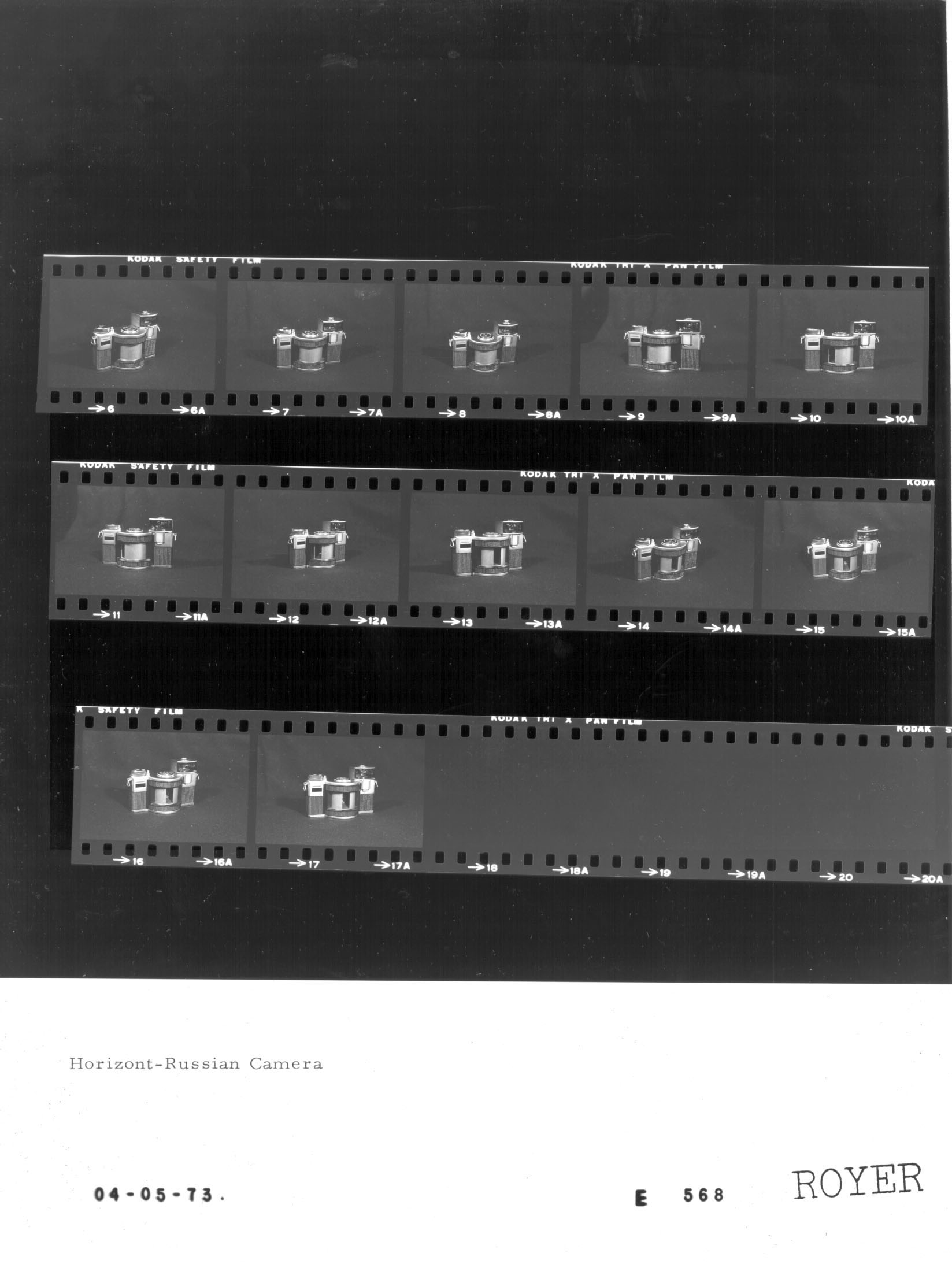
- Frame(s): WHPO-E0568-, Russian Horizont camera that takes panoramic wide angle photos. 4/5/1973, unknown unknown.
- Frame(s): WHPO-E0568-13, Russian Horizont camera that takes panoramic wide angle photos. 4/5/1973, unknown unknown.
Roll WHPO-E0569 Photographer: Atkins, Oliver | Color or B&W: Color
- Frame(s): WHPO-E0569-, President Nixon seated outside on a patio at the Western White House, during a meeting discussing Alaska pipeline with Secretary of the Interior Rogers Morton. 4/5/1973, San Clemente, California Western White House, La Casa Pacifica. President Nixon, Secretary of the Interior Rogers C. B. Morton, press corp members.
- Frame(s): WHPO-E0569-10, President Nixon seated outside on a patio at the Western White House, during a meeting discussing Alaska pipeline with Secretary of the Interior Rogers Morton. 4/5/1973, San Clemente, California Western White House, La Casa Pacifica. President Nixon, Secretary of the Interior Rogers C. B. Morton.
The White House Communications Agency Sound Recordings Collection contains public statements that took place between 1969 and 1974. Visit the finding aid to learn more.
S - White House Press Office Briefings (continuation of the L-series)
- WHCA-SR-S-047
Press briefing by Roy Ash. (4/5/1973, 4 Ambassadors Press Center)
Runtime: 33:00:00
Keywords: Press conferences, news conferences, interviews, media
Production credits: Audio feed supplied by GSA; Recorded by Earl Doss (initials of WHCA engineer)
Original Format: 1/4-inch reel-to-reel audiotape. Original source type: Original. - WHCA-SR-S-052
Press briefing by Secretary of the Interior Rogers Morton and Ronald Ziegler. (4/5/1973, San Clemente Inn, P.C., California)
Runtime: 57:40:00
Keywords: Press conferences, news conferences, interviews, media, press secretary
Production credits: Audio feed supplied by WHCA; Recorded byGET (initials of WHCA engineer)
Original Format: 1/4-inch reel-to-reel audiotape. Original source type: Original.
The White House Communications Agency Videotape Collection contains “off-the-air” recordings of televised programs produced between 1968 and 1974. Visit the finding aid to learn more.
- WHCA-6221
Weekly News Summary, Tape IV.
ALL NETWORKS
Runtime: 01:00:10
10. Smith/Geer/Kaplow: Wholesale prices up with Shultz. Time Code Start: 30:32. Keywords: wage and price controls, freezes, prices, costs, increases, decreases, economy, economics, budgets, finances, recession, inflation, money, cabinet, advisors, speeches. Network: ABC.
11. Reasoner/Jarriel: Meat boycott; inflation. Time Code Start: 34:15. Keywords: food, meats, animal products, markets, retail stores, prices, costs, increases, shortages, boycotts, economy, economics, budgets, finances, recession, inflation, money, wages. Network: ABC.
12. Reasoner/Koppel: Cambodia; South Vietnam's President Thieu in Washington, D.C.. Time Code Start: 36:30. Keywords: Cambodia, Vietnam War, South Vietnam, Presidents, travel, trips. Network: ABC.
13. Smith/Clark: L. Patrick Gray wants President Nixon to withdraw his nomination. Time Code Start: 40:00. Keywords: Federal Bureau of Investigations, leaders, nominations, nominees, law officials. Network: ABC.
14. Smith/Donaldson: Watergate; McCord to talk some more. Time Code Start: 42:04. Keywords: Watergate, Senate committee hearings, investigations, testimony, testify, cover-ups, break-in, burglary, theft, plumbers, scandals. Network: ABC.
15. Reasoner: Commentary on Los Angeles, California. Time Code Start: 44:08. Keywords: American, cities,. Network: ABC.
16. Chancellor/Levine: Wholesale prices up; inflation. Time Code Start: 46:03. Keywords: economy, economics, budgets, finances, recession, inflation, money, wages, costs, unemployment, prices. Network: NBC.
17. Chancellor: Meat boycott. Time Code Start: 48:08. Keywords: food, meats, animal products, markets, retail stores, prices, costs, increases, shortages, protests, boycotts. Network: NBC.
18. Chancellor/Duke: L. Patrick Gray will not head FBI. Time Code Start: 48:55. Keywords: Federal Bureau of Investigations, leaders, nominees. Network: NBC.
19. Chancellor: John Dean may have to testify on Watergate; McCord to tell story to public. Time Code Start: 50:50. Keywords: advisors, Watergate, Senate committee hearings, investigations, testimony, testify, cover-ups, break-in, burglary, theft, plumbers, scandals. Network: NBC.
20. Chancellor/Brinkley: Some POWs to be charged with misconduct; aid to Hanoi; comment by David on aid to Hanoi. Time Code Start: 52:14. Keywords: Vietnam War, Vietnam Prisoner of War, crimes. Network: NBC.
21. Chancellor/Rosenfeld: South Vietnam's President Thieu in Washington; the Vietnam war goes on. Time Code Start: 56:16. Keywords: South Vietnam, Presidents, travel, trips, Washington, D. C., Vietnam War. Network: NBC.
22. Chancellor: President Nixon vetoes another bill. Time Code Start: 58:43. Keywords: Presidents, vetoes, bills, laws. Network: NBC.
23. Chancellor: L. Patrick Gray withdraws from consideration for FBI post. Time Code Start: 59:16. Keywords: Federal Bureau of Investigations, leaders, death, replacements. Network: NBC. - WHCA-6222
Weekly News Summary, Tape V.
ALL NETWORKS
Runtime: 1:00
1. Cronkite/Kelly: Boycott on meat. Time Code Start: 00:00. Keywords: food, meats, animal products, markets, retail stores, prices, costs, increases, shortages, protests, boycotts. Network: CBS.
2. Cronkite/Threlkeld: Wholesale prices up; lumber prices up. Time Code Start: 02:00. Keywords: wage and price controls, freezes, prices, costs, increases, decreases, economy, economics, budgets, finances, recession, inflation, money. Network: CBS.
3. Cronkite/Kalb: Aid to Hanoi out; South Vietnam's President Thieu in Washington; Vietnam war goes on. Time Code Start: 04:31. Keywords: South Vietnam, Presidents, travel, trips, Washington, D. C., Vietnam War. Network: CBS.
4. Cronkite/Mudd: L. Patrick Gray withdraws from FBI race; McCord wants to make Watergate public; Senator Weiker on Watergate. Time Code Start: 07:31. Keywords: Watergate, Federal Bureau of Investigations, organizations, crime, espionage, spying, nominees, Senate committee hearings, investigations, testimony, testify, cover-ups, break-in, burglary, theft, plumbers, scandals. Network: CBS.
5. Sevareid: Commentary on Watergate. Time Code Start: 11:50. Keywords: Watergate, Senate committee hearings, investigations, testimony, testify, cover-ups, break-in, burglary, theft, plumbers, scandals. Network: CBS.
6. Cronkite: President Nixon vetoes another bill; wants Alaskan oil pipeline. Time Code Start: 14:04. Keywords: petroleum, gasoline, oil crisis, energy crisis, transportation, shortages, investigations, Presidents, bills, laws, vetoes. Network: CBS.
7. Cronkite/Morton: The Vietnam veterans and G.I. Bill. Time Code Start: 14:57. Keywords: Vietnam War, bills, laws, signings, military, troops, veterans, benefits, education, financial aid. Network: CBS.
Context (External Sources)
The Vanderbilt Television News Archive is the world's most extensive and complete archive of television news. They have been recording, preserving and providing access to television news broadcasts of the national networks since August 5, 1968.
Wikipedia is a free encyclopedia that anyone can edit.